

Contact Kit (100 Amp) for Electric Lift Truck
1105129111
Couldn't load pickup availability
- Expert support & fitment help
- 30-day returns
- Fast Shipping
Compatibility
|
Make |
- |
|---|---|
|
Model |
- |
Visit our diagram page for part references to popular models
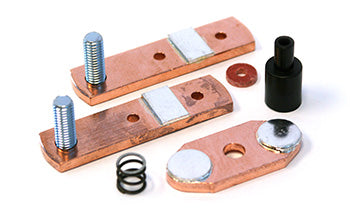
Product Description
CONTACT KIT (100 AMP)
Frequently Asked Questions
Q: What is the 100 amp rating on contact kit 1105129111?
A: Contact kit 1105129111 is rated for 100 ampere continuous current capacity. This amperage rating means the contacts are engineered to safely conduct up to 100 amps during battery charging without overheating or arcing. Do not use this kit on chargers rated above 100 amps.
Q: Which electric lift trucks and chargers use 100 amp contact kit 1105129111?
A: Contact kit 1105129111 (100 amp) is compatible with medium to large-capacity electric lift trucks and fast-charge systems from Crown, Toyota, Hyster, Yale, Raymond, and Linde that operate in the 100 amp charging range. Verify your charger amperage rating and truck connector type before ordering.
Q: What happens if contact kit 1105129111 is undersized for my charger?
A: Using a 100 amp contact kit on a charger rated higher than 100 amps causes contact overheating, rapid wear, arcing, and potential fire risk. Contact resistance increases with temperature, degrading charging speed and damaging the battery connector. Always match contact amperage to charger specification exactly.
Q: How do I know if contact kit 1105129111 is worn out?
A: Replace contact kit 1105129111 when you observe pitting or cratering on contact surfaces, visible corrosion, slow battery charging despite full charger function, sparking at the connector, or the truck charger receptacle becoming hot during charging. These signs indicate contact degradation and reduced current capacity.
Q: What material are the 100 amp contacts in kit 1105129111 made from?
A: Contact kit 1105129111 contacts are manufactured from heavy-duty copper alloy or silver-plated copper rated for high-amperage applications. This material composition provides low electrical resistance, superior heat dissipation, and corrosion resistance needed for 100 amp continuous duty.
Q: What is the expected service life of 100 amp contact kit 1105129111?
A: Contact kit 1105129111 typically provides 3 to 6 years of service in heavy-use warehouse environments with multiple daily charge cycles. Fast-charge systems stress contacts more than standard chargers, shortening replacement intervals. Inspect contacts every 12 months and replace when pitting begins.