
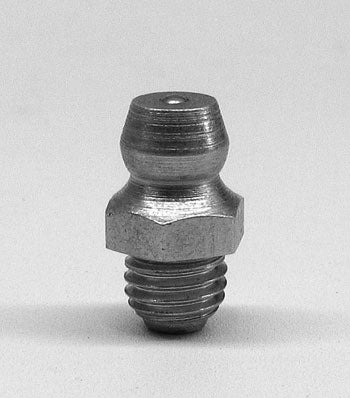
Grease Fitting for Forklift
1231-1055
Couldn't load pickup availability
- Expert support & fitment help
- 30-day returns
- Fast Shipping
Compatibility
|
Make |
- |
|---|---|
|
Model |
- |
Visit our diagram page for part references to popular models
Product Description
Grease fitting
Frequently Asked Questions
Q: What is the purpose of grease fitting 1231-1055 on forklift equipment?
A: The 1231-1055 is a grease fitting (zerk nipple) that allows controlled injection of lubricant into pivot joints, mast bearings, and steering mechanisms on forklifts. It enables sealed lubrication without requiring disassembly of moving components.
Q: What forklift brands and assembly types are compatible with the 1231-1055?
A: This fitting is used on Yale, Jungheinrich, and Linde forklift mast columns, steering pivot assemblies, and load wheel bearing hubs. Thread type and diameter determine compatibility with specific mounting locations on your equipment.
Q: What are the specifications and material construction of the 1231-1055 fitting?
A: The 1231-1055 is manufactured from steel or brass with either metric or SAE thread specifications, designed for high-pressure grease gun application. The fitting is rated for industrial vibration and temperature ranges typical of material handling environments.
Q: How do I know if this grease fitting has failed or become damaged?
A: Failure indicators include grease leaking around the fitting shoulder, a bent or corroded barrel preventing grease gun seating, internal blockage blocking grease flow, or stripped threads that cannot accept a grease gun coupler. Replace immediately to prevent accelerated component wear.
Q: What is the recommended lubrication schedule for this grease fitting?
A: Standard maintenance requires lubrication every 30 to 50 operating hours for equipment in regular use, or weekly for continuous-duty forklifts. Bearing type, load intensity, and operating environment affect optimal intervals. Consult your equipment manual for specific lubrication schedules.