

Grease Fitting for Forklift
14352740
Guaranteed Fit. Check fit with us before you buy. If we confirm it fits your machine and it doesn’t, we’ll exchange or refund it: no restocking fee, return shipping on us. How it works
Not sure it fits? Send us your make, model and serial number and we’ll check it before you buy.
Couldn't load pickup availability
- Expert support & fitment help
- 30-day returns
- Fast Shipping
Compatibility
|
Make |
- |
|---|---|
|
Model |
- |
Visit our diagram page for part references to popular models
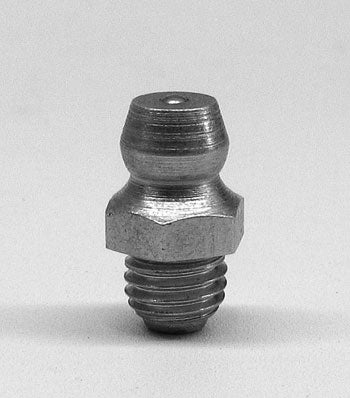
Product Description
Grease fitting
Frequently Asked Questions
Q: What is a grease fitting and where does it go on a forklift?
A: A grease fitting (also called a zerk fitting) is a small threaded connector that allows you to pump grease into bearing assemblies, pivot points, and lift mechanisms. Forklift models like Toyota, Hyster, Linde, and Mitsubishi typically have fittings on the mast, load wheel hubs, and tilt cylinders.
Q: What thread size and material is grease fitting 14352740?
A: Verify the thread size (typically M10x1.25 or 1/4-inch NPT) and material composition (steel, stainless, or brass) by matching the fitting to your forklift documentation or comparing against existing fittings on your equipment. Mismatched thread sizes will not seal and will leak grease.
Q: How often should I service grease fitting 14352740?
A: Most forklift maintenance schedules require greasing every 50 to 100 operating hours or monthly, whichever comes first. Heavy-use equipment or wet environments require more frequent service. Use a standard grease gun and pump until grease appears at the bearing seals.
Q: What happens if the grease fitting gets damaged or clogs?
A: A damaged or clogged fitting prevents lubrication from reaching the bearing. This causes accelerated wear, noise, and eventual bearing failure. Replace the fitting immediately if it is stripped, broken, or will not accept grease gun pressure.
Q: Is fitting 14352740 compatible with all grease types?
A: This fitting works with standard NLGI Grade 2 lithium-based grease commonly used in material handling. Verify compatibility with your forklift manual, as some equipment requires specific grease formulations for cold storage or high-temperature environments. Mixing incompatible greases can reduce lubrication effectiveness.