

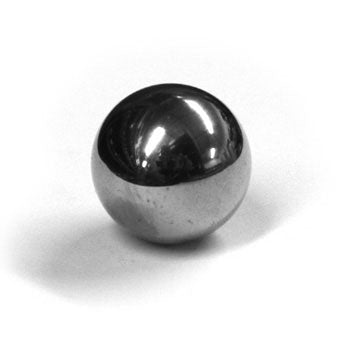
Product Description
Ball
Specifications
Product Overview
| Product Type | Ball Component |
Physical Specifications
| Common Uses | Bearing balls, ball joints, pivot points, steering mechanisms, load wheel assemblies |
| Surface Finish | Hardened and polished |
Compatibility
| Application | Pallet Jacks, Lift Trucks, Material Handling Equipment |
| Compatible Equipment Types | Manual Pallet Jacks, Electric Pallet Jacks, Lift Trucks |
Frequently Asked Questions
Q: What material handling equipment does ball component SKU 216168 fit?
A: SKU 216168 is a ball component used in material handling equipment such as manual pallet jacks, electric pallet jacks, and lift trucks from brands including Crown, Toyota, Raymond, Yale, Hyster, and Linde. Exact compatibility depends on the specific equipment model and assembly location. Confirm your equipment specifications before ordering.
Q: What are the specifications and dimensions of this ball component?
A: SKU 216168 ball component specifications include material type, diameter, and surface finish. Precise dimensions and material grade are determined by the application within your equipment. Contact our technical support team with your specific equipment model and assembly location to receive exact dimensional and material specifications.
Q: Where is this ball component located in material handling equipment?
A: Ball components like SKU 216168 are typically found in pivot points, steering mechanisms, load wheel assemblies, and hydraulic or mechanical linkages. The specific location depends on your equipment manufacturer and model. Common uses include load distribution, directional control, and load wheel support in both manual and electric material handling equipment.
Q: What is the expected lifespan of this ball component?
A: Ball components typically last 3 to 5 years under normal operating conditions. Lifespan depends on load frequency, environmental exposure, and operational stress. Proper lubrication and routine maintenance extend component life. Components exposed to moisture, salt, or corrosive environments may require replacement sooner.
Q: How do I know if this ball component needs replacement?
A: Replace the ball component if you observe grinding noises, rough movement, binding, or resistance where the component operates. Visible wear, corrosion, pitting, or cracks on the ball surface indicate failure. Loose or unstable movement in the assembly also signals component wear and the need for replacement.