

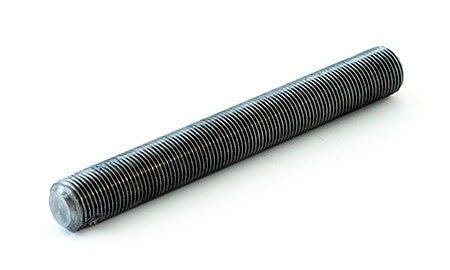
Product Description
ROD, THREADED
Specifications
Product Overview
| Product Type | Threaded Rod |
Physical Specifications
| Material | High-Strength Steel |
| Finish | Zinc Plated or Stainless Steel |
| Corrosion Resistance | Zinc plating protects against rust in warehouse and cold storage environments |
| Thread Type | Standard Machine Thread |
| Durability | Multiple year service life with proper maintenance |
Compatibility
| Application | Electric Lift Trucks, Forklifts, Pallet Jacks |
Frequently Asked Questions
Q: What lift truck models use this threaded rod assembly?
A: This threaded rod is compatible with electric lift truck models from Crown, Toyota, Raymond, and other major OEMs that use this specific diameter and thread pitch. Confirm the exact thread specification and length match your equipment.
Q: What material is this rod made of and how corrosion-resistant is it?
A: This rod is typically high-strength steel with zinc plating or sometimes stainless steel depending on the application. The plating protects against rust in damp warehouse and cold storage environments, extending service life significantly.
Q: How do I diagnose if this rod is damaged?
A: Inspect for bent or twisted threads, deep corrosion pits that penetrate the plating, cracks, or cross-threaded sections. Test threads with a matching nut to confirm they spin smoothly without binding. Replace if threads are compromised or if the rod is bent.
Q: What should I check when ordering a replacement?
A: Verify diameter, thread pitch, overall length, and material finish (zinc-plated vs. stainless). Cross-reference your equipment model number to confirm exact specifications. Measure carefully as threaded rods are not interchangeable across different applications.
Q: How long does this threaded rod typically last?
A: In normal warehouse service with proper lubrication and maintenance, threaded rods last several years or longer. Lifespan reduces in cold storage or high-moisture environments. Replace before complete failure to avoid equipment downtime and safety risks.