

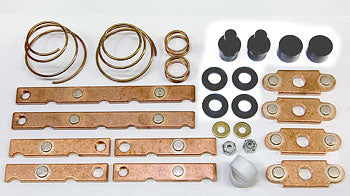
Contact Kit for Electric Lift Truck
220021935
Couldn't load pickup availability
- Expert support & fitment help
- 30-day returns
- Fast Shipping
Compatibility
|
Make |
- |
|---|---|
|
Model |
- |
Visit our diagram page for part references to popular models
Product Description
CONTACT KIT
Specifications
Product Overview
| Part Number | 220021935 |
| Product Type | Contact Kit |
Physical Specifications
| Typical Use | Replacement contacts for contactors, motor starters, control switches |
| Material | Silver alloy or copper electrical contacts |
| Function | Opens and closes electrical circuits in control systems |
| Contact Type | Main or auxiliary contacts (confirm with application) |
Compatibility
| Application | Electric Lift Truck Electrical Control Systems |
Frequently Asked Questions
Q: What is the 220021935 contact kit used for?
A: The 220021935 is a contact kit for electric lift truck equipment. Contact kits typically consist of electrical contacts, terminals, or contact sets used in control switches, motor starters, or power distribution systems to open and close electrical circuits.
Q: Which electric lift truck equipment does the 220021935 contact kit fit?
A: The 220021935 is a replacement contact kit for electric lift truck electrical systems. Verify your equipment model and the specific switch or contactor that requires replacement to confirm compatibility.
Q: What voltage and current rating does the 220021935 contact kit have?
A: Electrical contact ratings depend on the control circuit and switch type. Contact our parts team with your equipment model and the location of the failed contact assembly to confirm the exact voltage and current specifications for the 220021935.
Q: What materials are used in the 220021935 contact kit?
A: Electrical contacts in lift truck control systems are typically made from silver alloy, copper, or other materials selected for low electrical resistance and resistance to arcing. The specific material composition depends on the application. Contact us for detailed material specifications.
Q: When should the 220021935 contact kit be replaced?
A: Replace the contact kit when electrical contacts become pitted, eroded, or develop poor electrical connection causing hesitation, sparking, or failure of the control switch or contactor. Signs include intermittent operation, overheating, or inability to engage the circuit.