

Contacts for Electric Lift Truck - Fits Yale, Crown
2200226-28
Guaranteed Fit. Check fit with us before you buy. If we confirm it fits your machine and it doesn’t, we’ll exchange or refund it: no restocking fee, return shipping on us. How it works
Not sure it fits? Send us your make, model and serial number and we’ll check it before you buy.
Couldn't load pickup availability
- Expert support & fitment help
- 30-day returns
- Fast Shipping
Compatibility
|
Make |
|
|---|---|
|
Model |
- |
Visit our diagram page for part references to popular models
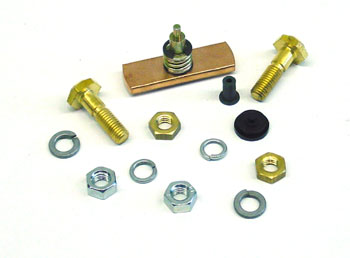
Product Description
Contact kit
Specifications
Part Numbers & Compatibility
| Make | Yale, Crown |
| Part Number | 2200226-28 |
| Related Part Numbers | 2200226-25, 2200226-26, 2200226-27, 2200226-30 |
| Application | Power Contactor Assembly Replacement |
Additional Specifications
| Product Type | Contact Kit |
| Function | Electrical power switching and load control in contactor assemblies |
| Equipment Type | Electric Lift Trucks, Electric Pallet Jacks |
| Compatible Brands | Crown, Toyota, Raymond, Yale, Hyster, Jungheinrich, Linde, Clark, Mitsubishi, CAT, BT |
Frequently Asked Questions
Q: What is the 2200226-28 contact kit used for?
A: The 2200226-28 is a contact kit for electric lift trucks, designed as a replacement component for power contactor assemblies in industrial electric forklifts and pallet jacks.
Q: Which lift truck brands does the 2200226-28 fit?
A: The 2200226-28 is compatible with electric lift truck manufacturers including Crown, Raymond, Yale, and Hyster. Verify your equipment specification against your lift truck documentation.
Q: Is the 2200226-28 related to other contact kit part numbers?
A: The 2200226-28 is part of a contactor family that includes related part numbers such as 2200226-26, 2200226-27, 2200226-25, and 2200226-30. Confirm your specific equipment model to ensure you order the correct equivalent.
Q: What factors affect contact kit replacement frequency?
A: Contact kit service life depends on duty cycle, control voltage stress, and environmental conditions. Electric lift trucks in frequent-use operations, wet storage, or cold environments may require contact replacement every 2 to 5 years. Lower-cycle operations may extend life to 5 to 7 years.
Q: What material is the 2200226-28 made from?
A: The 2200226-28 is constructed from durable materials designed for long-term use in industrial environments.
Q: How do I know if I need to replace the 2200226-28?
A: Signs that the 2200226-28 may need replacement include inconsistent performance, difficulty in operation, or visible wear. Always refer to your equipment's maintenance guidelines for guidance.