

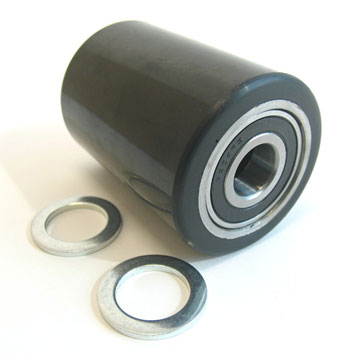
Polyurethane Load Wheel for Manual Pallet Jacks - 2.9 x 4
25029
Couldn't load pickup availability
- Expert support & fitment help
- 30-day returns
- Fast Shipping
Compatibility
|
Make |
- |
|---|---|
|
Model |
|
Visit our diagram page for part references to popular models
Product Description
"
Polyurethane load wheel with sealed ball bearings designed for manual pallet jack applications. This replacement wheel incorporates a 70D Shore hardness polyurethane tread, and a steel core to deliver abrasion resistance and quiet operation. Includes axle, mounting hardware, and sealed precision bearings. Compatible with manual pallet jack models using load wheels. No cross-reference or interchange part numbers currently identified.
"
Specifications
Material & Construction
| Tread Material | Polyurethane, 70D Shore hardness |
Features & Inclusions
| Part Number | 25029 |
Frequently Asked Questions
Q: What are the dimensions of the 25029 polyurethane load wheel?
A: The 25029 load wheel is compatible with manual pallet jack models.
Q: What material is the 25029 wheel tread made from?
A: The 25029 features a 70D Shore hardness polyurethane tread bonded to a metal core. This polyurethane compound provides abrasion resistance, quiet operation, and durability in standard material handling applications on both dry and wet concrete surfaces.
Q: Does the 25029 include bearings and mounting hardware?
A: Yes, the 25029 includes an axle, mounting hardware, and sealed precision ball bearings. The sealed bearings provide maintenance-free operation and protect against contamination in typical warehouse and loading dock environments.
Q: Which manual pallet jack models use the 25029 load wheel?
A: The 25029 is a replacement wheel compatible with manual pallet jacks from Crown, Toyota, Raymond, Yale, Hyster, and other manufacturers that use load wheel assemblies. Verify wheel diameter and width match your equipment before ordering.
Q: What is the typical service life of the 25029 wheel?
A: Service life depends on load, floor conditions, and usage frequency. Tread wear and bearing condition are the primary factors. Sealed bearings require no maintenance; replace the wheel when tread surface shows excessive wear or loss of grip.