

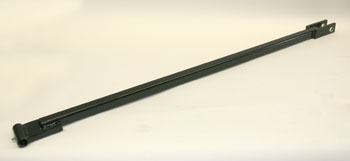
Product Description
Pull rod (48 forks)
Frequently Asked Questions
Q: What is the SKU 38470 pull rod designed for?
A: The 38470 pull rod is designed for 48-inch forks and controls load engagement or tilt movement in forklift mast assemblies. It connects the control lever to the hydraulic or mechanical linkage. Verify your fork width and mast type before ordering.
Q: What material is used in the SKU 38470 pull rod?
A: The pull rod is typically made from hardened steel or alloy steel rod stock with formed or machined ends. The material provides rigidity to transmit control forces without bending or twisting under load.
Q: Is the 38470 pull rod compatible with all 48-inch fork configurations?
A: Not necessarily. The pull rod length and end geometry must match your specific mast design. Forks from Crown, Toyota, Raymond, and other OEMs may use different linkage geometries. Measure your current rod and compare dimensions before ordering.
Q: What causes pull rod failure in the 38470 configuration?
A: Failure occurs from bending under excessive side load, corrosion leading to stress concentration, or misalignment causing binding. Signs include binding when engaging or disengaging forks, visible bending, or cracking at attachment points. Replace the rod immediately if these symptoms appear.
Q: How is the SKU 38470 pull rod attached to the mast linkage?
A: The pull rod typically uses clevis pins, lock pins, or threaded connections at both ends. Ensure all fasteners remain tight during operation. Loose pins or fasteners will degrade control response and can cause load drop.
Q: Can the 38470 pull rod be repaired or must it be replaced?
A: Minor corrosion can be cleaned, but bent or cracked pull rods must be replaced. Do not attempt to straighten a bent rod by heating or hammering, as this degrades material properties and compromises safety.