

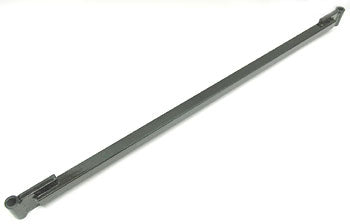
Push Rod
5850945-05
Couldn't load pickup availability
- Expert support & fitment help
- 30-day returns
- Fast Shipping
Compatibility
|
Make |
- |
|---|---|
|
Model |
- |
Visit our diagram page for part references to popular models
Product Description
PUSH ROD
Specifications
Product Overview
| Part Number | 5850945-05 |
Physical Specifications
| Component Type | Push Rod / Control Linkage |
| Function | Transmits force between actuators and movable control assemblies |
| Material | Steel with corrosion-resistant finish |
| Condition | Direct replacement for electric lift truck systems |
| Durability | Withstands repeated actuation cycles under load |
| Inspection Requirement | Check for bending, cracks, and corrosion during maintenance |
Compatibility
| Application | Electric Lift Trucks - Steering and Drive Control |
Frequently Asked Questions
Q: What is the 5850945-05 push rod and what does it do?
A: The 5850945-05 is a push rod component for electric lift truck drive and steer mechanisms. Push rods transmit force between actuators and movable assemblies, converting hydraulic or mechanical inputs into directional control. This part is an OEM direct replacement for electric lift trucks.
Q: Which electric lift truck brands use the 5850945-05 push rod?
A: The 5850945-05 is compatible with electric lift trucks from Crown, Toyota, Raymond, Yale, Hyster, Jungheinrich, Linde, Clark, Mitsubishi, CAT, and BT. Check your equipment serial number and part location to confirm compatibility before ordering.
Q: What symptoms indicate the 5850945-05 push rod needs replacement?
A: Signs of push rod failure include delayed or unresponsive steering, loss of lift control, bent or cracked rod material, and disconnection at mounting points. Operating an electric lift truck with a failed push rod creates a safety hazard and can damage the control mechanism.
Q: Is the 5850945-05 a structural or mechanical component?
A: The 5850945-05 is a mechanical component that transmits force under load. It must withstand repeated actuation cycles and maintain precise dimensions to ensure proper control response. Bent, cracked, or worn rods compromise equipment handling and safety.
Q: How often does the 5850945-05 push rod require replacement?
A: Push rod service life depends on usage intensity and environmental conditions. Heavy use, impact damage, or corrosion can shorten lifespan. Inspect the push rod during routine maintenance for bending, surface cracks, and corrosion. Replace when damage is visible or control response becomes sluggish.