

Grease Fitting for Forklift
67317-30510-71
Couldn't load pickup availability
- Expert support & fitment help
- 30-day returns
- Fast Shipping
Compatibility
|
Make |
- |
|---|---|
|
Model |
- |
Visit our diagram page for part references to popular models
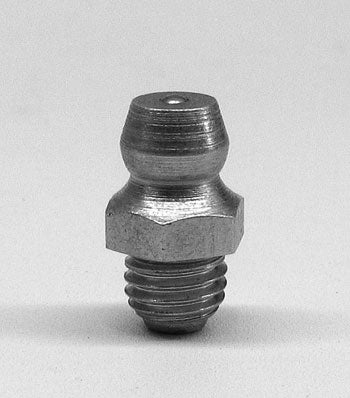
Product Description
Grease fitting
Frequently Asked Questions
Q: What is the 67317-30510-71 grease fitting used for?
A: The 67317-30510-71 is a grease fitting (zerk) used on forklift equipment to allow periodic lubrication of pivot points, bearing assemblies, and load wheel mechanisms. It is a one-way valve that accepts grease from a grease gun while preventing contamination from entering the bearing cavity.
Q: Which forklift manufacturers use the 67317-30510-71 grease fitting?
A: The 67317-30510-71 is compatible with forklifts and material handling equipment from manufacturers including Crown, Toyota, Raymond, Yale, Hyster, Jungheinrich, Linde, Clark, Mitsubishi, CAT, and BT. Verify the fitting size and thread type match your equipment attachment point before ordering.
Q: What size is the 67317-30510-71 grease fitting?
A: The 67317-30510-71 grease fitting is sized to fit standard forklift greasing points. It uses a straight or 45-degree design to facilitate easy access with a grease gun. Measure the existing fitting thread size and length to confirm compatibility with your equipment before ordering.
Q: What material is the 67317-30510-71 grease fitting made from?
A: The 67317-30510-71 is typically manufactured from hardened steel with zinc or nickel plating to resist corrosion. Steel construction ensures durability under the pressure of grease gun application and resists breakage in heavy warehouse environments.
Q: How often should the 67317-30510-71 fitting be used for greasing?
A: Grease through the 67317-30510-71 fitting monthly or according to your forklift manufacturer maintenance schedule. High-use equipment in dirty or wet environments may require more frequent greasing. Follow the recommended grease type (typically lithium-based) and volume specified for your equipment model.
Q: When should the 67317-30510-71 grease fitting be replaced?
A: Replace the 67317-30510-71 fitting if it becomes damaged, loses the internal check valve function, or leaks grease. A faulty fitting that does not hold grease allows bearing contamination. A corroded or stripped fitting thread indicates replacement is necessary. Inspect fittings during routine maintenance for damage or wear.