

24 Volt Contactor for Electric Lift Truck
8730878
Couldn't load pickup availability
- Expert support & fitment help
- 30-day returns
- Fast Shipping
Compatibility
|
Make |
- |
|---|---|
|
Model |
- |
Visit our diagram page for part references to popular models
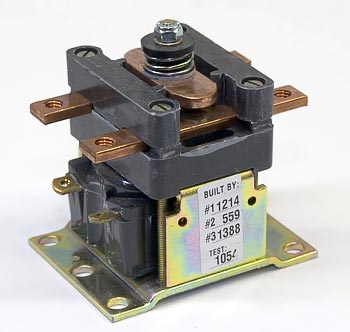
Product Description
Contactor (24 volt)
Specifications
Product Overview
| Product Type | Electromechanical Contactor |
Physical Specifications
| Voltage Rating | 24 Volt DC |
| Function | Motor control switch for electric lift trucks |
| Primary Application | Electric forklifts, electric pallet jacks, reach trucks, order pickers |
| Switching Function | Motor start/stop, directional control, safety shutdown |
Compatibility
| Compatible Equipment Manufacturers | Crown, Toyota, Raymond, Yale, Hyster, Nichiyu, Jungheinrich |
Frequently Asked Questions
Q: What voltage rating does the 8730878 contactor have?
A: The 8730878 is a 24-volt DC contactor designed for electric lift trucks operating on standard 24-volt electrical circuits. Confirm your equipment voltage matches 24 volts before ordering.
Q: How does the 8730878 compare to the 8730634 contactor?
A: Both the 8730878 and 8730634 are 24-volt contactors for electric lift trucks. Cross-reference your equipment manual to determine which SKU is correct for your specific model and serial number range. Both are compatible with Crown, Toyota, Raymond, Yale, Hyster, and similar manufacturers.
Q: What is the purpose of a contactor in an electric lift truck?
A: A contactor is an electromechanical switch that controls high-current circuits in lift trucks. It engages and disengages the motor power circuit based on control signals. Contactors manage motor start/stop, directional control, and safety shutdown functions.
Q: What symptoms indicate the 8730878 contactor is failing?
A: Signs of contactor failure include intermittent lift operation, failure to respond to controls, buzzing or clicking without engagement, loss of directional control, or inability to shut down the motor. If you experience these symptoms, replace the contactor immediately to prevent equipment downtime and safety hazards.
Q: How long does the 8730878 contactor typically last in service?
A: Contactors typically remain reliable for 3 to 5 years under normal operating conditions. Lifespan depends on frequency of use, electrical load cycling, and operating environment. High-use trucks may require contactor replacement sooner than low-use equipment.