

Bearing Assembly
950300024
Couldn't load pickup availability
- Expert support & fitment help
- 30-day returns
- Fast Shipping
Compatibility
|
Make |
- |
|---|---|
|
Model |
- |
Visit our diagram page for part references to popular models
Product Description
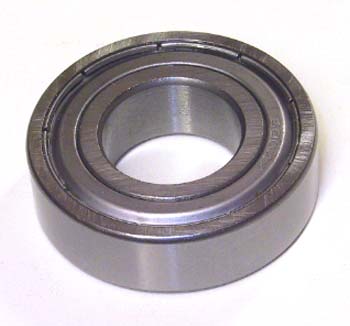
BEARING assembly
Specifications
Product Overview
| Product Type | Sealed Ball Bearing Assembly |
Physical Specifications
| Bearing Design | Double-sealed ball bearing |
| Sealing Type | Sealed (protects against water, dust, contamination) |
| Duty | High-load warehouse and material handling |
| Environment Suitability | Wet floors, cold storage, damp warehouse areas |
| Expected Service Life | 2-5 years in typical warehouse conditions |
Compatibility
| Application | Manual pallet jack wheel assemblies |
| Compatible Equipment | Manual pallet jacks, hand pallet trucks, wheel assemblies |
Frequently Asked Questions
Q: What is bearing assembly 950300024 used for?
A: Bearing assembly 950300024 is a sealed ball bearing component for manual pallet jack wheel assemblies. It is engineered for high-load warehouse and material handling applications where smooth wheel operation and durability are critical.
Q: Which manual pallet jack brands use bearing assembly 950300024?
A: This bearing assembly is compatible with manual pallet jack wheels from Crown, Toyota, Raymond, Yale, Hyster, and similar OEM equipment. Verify exact wheel assembly compatibility before ordering by checking bore size and mounting dimensions.
Q: What is the durability advantage of bearing assembly 950300024 in wet environments?
A: The sealed bearing design prevents water ingress and corrosion of bearing races and balls. This is essential for manual pallet jacks used on wet floors, in cold storage, or in damp warehouse areas where moisture exposure accelerates bearing failure.
Q: How often should bearing assembly 950300024 be replaced?
A: Bearing replacement frequency depends on load weight, floor conditions, and usage intensity. Typical service life is 2 to 5 years for manual pallet jacks in warehouse environments. Wet or contaminated conditions may require more frequent replacement.
Q: What causes bearing assembly 950300024 to fail prematurely?
A: Premature failure is caused by overloading beyond jack capacity, operating on excessively rough or debris-laden floors, impact damage, moisture penetration, or years of continuous high-load use. Proper load limits and floor maintenance extend bearing life.