

Cone Bearing for Pallet Jacks
A-750-119
Couldn't load pickup availability
- Expert support & fitment help
- 30-day returns
- Fast Shipping
Compatibility
|
Make |
- |
|---|---|
|
Model |
- |
Visit our diagram page for part references to popular models
Product Description
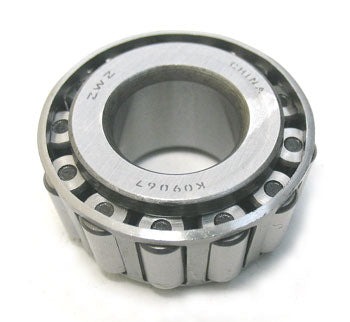
CONE, BEARING
Specifications
Physical Specifications
| Material | Hardened Steel Alloy |
| Load Type | Radial and Axial |
| Precision Class | Industrial Grade |
| Cage Material | Steel or Brass |
| Surface Treatment | Hardened and Polished |
Compatibility
| Application | Manual Pallet Jack Load Wheels |
Frequently Asked Questions
Q: What is a bearing cone and does the A-750-119 require a matching cup?
A: The A-750-119 bearing cone pairs with a bearing cup to form a complete assembly. Cones and cups must match part numbers and dimensions. Using mismatched components causes premature failure.
Q: Which manual pallet jack brands use the A-750-119 cone bearing?
A: The A-750-119 is compatible with manual pallet jacks from Crown, Toyota, Raymond, Yale, and other OEM manufacturers. Confirm your equipment model number matches the compatibility list before ordering.
Q: What material is the A-750-119 cone bearing made from?
A: Bearing cones are typically manufactured from hardened steel alloys. This material provides durability under the rolling and radial loads encountered in load wheel applications on manual pallet jacks.
Q: How do I know if the A-750-119 cone bearing needs replacement?
A: Signs of cone bearing wear include rough rolling motion, grinding noises, or excessive wheel play. If the matching cup shows pitting or spalling, replace both cone and cup together.
Q: What is the typical load rating for the A-750-119 bearing cone?
A: Load ratings vary by specification. Consult the product datasheet for radial and axial load limits. Do not exceed rated capacity or bearing lifespan will be significantly reduced.
Q: Can the A-750-119 be used in high-temperature environments?
A: Standard bearing cones are rated for typical warehouse temperatures. Cold storage and specialized thermal environments may require different bearing specifications. Verify temperature limits in the product specification before using in non-standard conditions.