

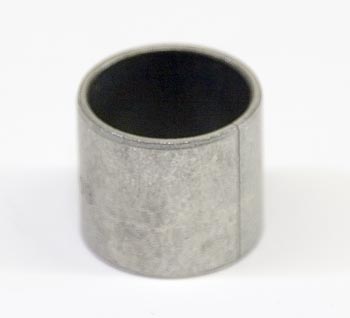
Bushing 20x23x20
A000000288
Guaranteed Fit. Check fit with us before you buy. If we confirm it fits your machine and it doesn’t, we’ll exchange or refund it: no restocking fee, return shipping on us. How it works
Not sure it fits? Send us your make, model and serial number and we’ll check it before you buy.
Couldn't load pickup availability
- Expert support & fitment help
- 30-day returns
- Fast Shipping
Compatibility
|
Make |
- |
|---|---|
|
Model |
- |
Visit our diagram page for part references to popular models
Product Description
Bushing 20x23x20
Specifications
Physical Specifications
| Outer Diameter (OD) | 20 mm |
| Length | 20 mm |
| Material Composition | Bronze-composite or polymer |
| Primary Application | Steering linkage, pivot points, load pin holes |
| Wear Characteristics | Typical lifespan 2-4 years in moderate-duty applications; accelerated by heavy use or insufficient lubrication |
| Wear Indicators | Binding during steering or load handling, increased noise, visible play in joint |
Compatibility
| Equipment Compatibility | Forklifts and pallet jacks (multiple manufacturers) |
Frequently Asked Questions
Q: What are the exact dimensions of the A000000288 bushing?
A: The A000000288 bushing measures 20 mm outer diameter, 23 mm inner bore, and 20 mm length. These dimensions fit specific pivot points, load pin holes, and steering linkage applications on forklifts and pallet jacks. Verify compatibility with your equipment.
Q: Which material handling equipment brands use the A000000288 bushing?
A: The A000000288 bushing is compatible with manual and electric pallet jacks, as well as forklifts from Crown, Toyota, Raymond, Yale, Hyster, Jungheinrich, Linde, Clark, Mitsubishi, CAT, and BT. Confirm the bushing location and size match your equipment.
Q: What material is the A000000288 bushing made from?
A: The bushing is typically constructed from bronze-composite or polymer material designed to reduce friction and wear against hardened steel pins. The material choice provides wear resistance and load-bearing capability in repetitive pivot applications.
Q: How long does the A000000288 bushing last before replacement?
A: Expected lifespan is 2-4 years in moderate-duty applications. Heavy use or insufficient lubrication accelerates wear. Signs of wear include binding during steering or load handling, increased noise, or visible play in the joint.
Q: What happens if the A000000288 bushing wears out?
A: A worn bushing increases clearance between the pin and bore, causing loose steering, reduced handling control, and accelerated wear on the pin itself. Operating with a worn bushing also increases side loads on adjacent components and reduces overall equipment safety.