

Sealed Bearing Assembly for Manual Pallet Jack
A000029016
Couldn't load pickup availability
- Expert support & fitment help
- 30-day returns
- Fast Shipping
Compatibility
|
Make |
- |
|---|---|
|
Model |
- |
Visit our diagram page for part references to popular models
Product Description
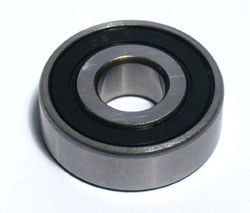
Sealed bearing assembly (SKU: A000029016) for manual pallet jack load wheel and caster support. Features 20 mm inner bore, 47 mm outer diameter, 14 mm width, pressed steel cage, high carbon chrome steel races and balls, double-sided non-contact seals, C3 clearance, and factory grease fill for reliable warehouse material handling applications.
Specifications
Material & Construction
| Cage Material | Pressed steel |
| Finish | Precision ground and polished |
Part Numbers
| Manufacturer Part Number | A000029016 |
| OEM Part Number | A000029016 |
Frequently Asked Questions
Q: What are the dimensions of the A000029016 sealed bearing assembly?
A: The A000029016 has an inner bore of 20 mm, outer diameter of 47 mm, and width of 14 mm. These dimensions are standard for manual pallet jack load wheel and caster support applications.
Q: What is the load capacity and bearing grade of the A000029016?
A: The A000029016 is a high carbon chrome steel bearing (SAE 52100) with C3 clearance and a pressed steel cage. The C3 clearance provides adequate internal space for load distribution, making it suitable for manual pallet jack duty cycles.
Q: Does the A000029016 require lubrication?
A: The A000029016 comes with a factory grease fill. Double-sided non-contact seals keep contaminants out and grease in, reducing maintenance requirements. Check grease level periodically and relubricate if bearing noise or drag increases.
Q: What is the seal design on the A000029016?
A: The A000029016 features double-sided non-contact seals. Non-contact seals generate minimal drag while still protecting the bearing races and balls from water, dirt, and debris common in warehouse environments.
Q: What applications is the A000029016 designed for?
A: The A000029016 is designed for manual pallet jack load wheel and caster support applications. The high carbon chrome steel construction and factory grease fill make it suitable for reliable warehouse material handling where frequent start-stop and turning cycles are typical.