

Pin Link for Pallet Jacks
A000035654
Couldn't load pickup availability
- Expert support & fitment help
- 30-day returns
- Fast Shipping
Compatibility
|
Make |
- |
|---|---|
|
Model |
- |
Visit our diagram page for part references to popular models
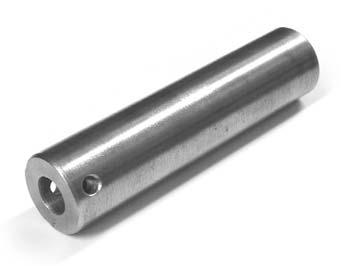
Product Description
Pin, link
Specifications
Product Overview
| Product Type | Pin Link / Linkage Pin |
Physical Specifications
| Material | Forged or cold-drawn steel |
| Load Type | Lateral and shear loads in linkage assemblies |
| Typical Applications | Mast linkage connections, arm assemblies, hydraulic cylinders, load transfer mechanisms |
| Durability | Resists bending deformation under rated load cycles; maintains dimensional accuracy across temperature ranges |
Compatibility
| Compatible Equipment Categories | Manual pallet jacks, electric pallet jacks, stackers, forklifts |
Frequently Asked Questions
Q: What is the purpose of the A000035654 pin link in material handling equipment?
A: The A000035654 pin link is a structural fastening component used to connect linkage assemblies in pallet jacks, hydraulic equipment, and load-bearing mechanisms. It transfers lateral and shear loads between mast sections and arm assemblies.
Q: What equipment brands are compatible with the A000035654 pin link?
A: This pin link is compatible with Crown, Toyota, Raymond, Yale, Hyster, and similar manual and electric pallet jack models. Verify the bore diameter and pin length against your equipment specifications before ordering.
Q: How does the A000035654 pin link fail, and what are the symptoms?
A: Pin links fail through shear fracture, bending, or corrosion-induced stress concentration. Symptoms include visible side-play in the linkage, rattling noises under load, misalignment of mast sections, and reduced lifting stability.
Q: What material is the A000035654 pin link made from?
A: This component is typically forged or cold-drawn steel with a yield strength suitable for repeated cycling. The material resists bending deformation under rated load cycles and maintains dimensional accuracy across temperature ranges.
Q: How long does the A000035654 pin link typically last before replacement?
A: Service life depends on load frequency and environmental conditions. In standard warehouse operations, expect 3 to 5 years of operation. Corrosive or high-frequency environments may require replacement every 2 to 3 years.