

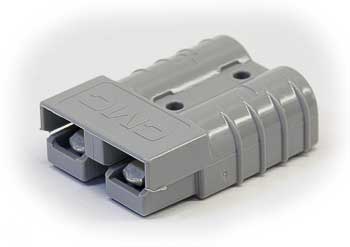
Connector (SB50 #6 Gray)
A8268-15
Couldn't load pickup availability
- Expert support & fitment help
- 30-day returns
- Fast Shipping
Compatibility
|
Make |
- |
|---|---|
|
Model |
|
Visit our diagram page for part references to popular models
Product Description
CONNECTOR (SB50 #6 GRAY)
Frequently Asked Questions
Q: What is the A8268-15 SB50 #6 Gray connector used for?
A: The A8268-15 is a medium-duty electrical connector for electric lift truck control circuits. The SB50 design with #6 gauge rating is used in control harnesses, solenoid circuits, and sensor connections. The gray color indicates neutral or signal connections distinct from high-current battery lines.
Q: What is the amperage rating for the A8268-15 connector?
A: The A8268-15 SB50 #6 connector is rated for medium-amperage control circuits, typically 30 to 50 amperes depending on application. This connector is suitable for solenoid activation circuits, pump motor controls, and electrical switch harnesses in 48-volt and 80-volt systems.
Q: Which electric lift truck systems use the A8268-15 connector?
A: The A8268-15 is used in control circuits across Crown, Toyota, Raymond, Jungheinrich, and similar electric lift trucks. It appears in direction solenoid harnesses, pump motor control circuits, and accessory switch connections. Verify your equipment wiring schematic to confirm correct application and voltage compatibility.
Q: What are the cable size specifications for the A8268-15?
A: The A8268-15 is designed to accommodate #6 AWG control cable. This gauge is appropriate for medium-amperage circuit protection and voltage drop limits. Always use properly-sized cable matching the A8268-15 specification to prevent overheating or voltage loss in control circuits.
Q: What symptoms indicate the A8268-15 connector needs replacement?
A: Replace the A8268-15 if the controlled device (solenoid, pump, or switch) responds intermittently or fails to activate despite proper control signals. Symptoms include loose connections, corrosion on contact surfaces, or visible pin damage. Poor connections create high resistance and prevent proper current flow in control circuits.