

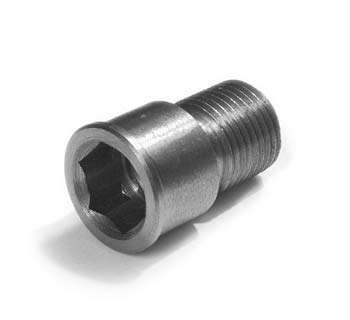
Allen Head Bolt for Manual Pallet Jack
800031505
Couldn't load pickup availability
- Expert support & fitment help
- 30-day returns
- Fast Shipping
Compatibility
|
Make |
- |
|---|---|
|
Model |
- |
Visit our diagram page for part references to popular models
Product Description
ALLEN HEAD BOLT
Specifications
Product Overview
| Product Type | Hex Socket Head Cap Screw (Allen Head Bolt) |
Physical Specifications
| Primary Material | Alloy Steel or Stainless Steel |
| Primary Application | Manual Pallet Jack Assemblies |
| Common Applications | Handle assemblies, structural joints, fastening points |
| Drive Type | Hexagonal Socket |
| Key Features | Low-profile fastening, high clamping force, recessed drive design |
| Load Rating | Designed for pallet jack structural and handle applications |
| Corrosion Resistance | Depends on material selection - stainless for wet/corrosive environments, alloy steel for standard duty |
Frequently Asked Questions
Q: What is an Allen head bolt and its purpose on pallet jacks?
A: An Allen head bolt (hex socket head cap screw) provides a recessed hexagonal drive for secure fastening. On pallet jacks, Allen bolts are used in handle assemblies, structural joints, and attachment points where a low-profile fastener and high clamping force are required.
Q: What are the specifications for SKU 800031505?
A: SKU 800031505 meets OEM specifications for manual pallet jack assemblies. For exact diameter, length, thread pitch, and hex key size, provide your equipment model number to our technical team. Specifications vary by equipment configuration.
Q: Can Allen head bolt 800031505 be used on both manual and electric pallet jacks?
A: SKU 800031505 is specified for manual pallet jack applications. Electric pallet jacks have different structural requirements and fastener specifications. Verify the equipment type and assembly location before ordering.
Q: What material grade is the Allen head bolt 800031505?
A: The bolt is manufactured from alloy steel or stainless steel depending on corrosion environment and load requirements. The specific grade ensures proper tensile strength and fatigue resistance for your pallet jack assembly.
Q: What failure signs indicate replacement is needed?
A: Replace the Allen head bolt when the hex socket is stripped or damaged, thread stripping occurs, surface corrosion prevents tightening, or visible bending develops. A compromised fastener creates joint looseness, structural instability, and potential equipment failure under load.