

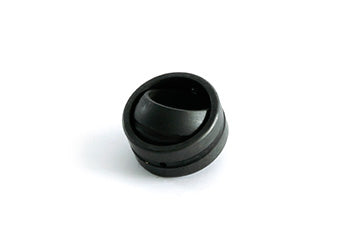
Spherical Bearing for Electric Lift Truck
1310275
Couldn't load pickup availability
- Expert support & fitment help
- 30-day returns
- Fast Shipping
Compatibility
|
Make |
- |
|---|---|
|
Model |
- |
Visit our diagram page for part references to popular models
Product Description
BEARING, SPHERICAL
Frequently Asked Questions
Q: What makes a spherical bearing different from standard bearings?
A: A spherical bearing (SKU 1310275) has a spherical outer race that allows self-aligning movement through multiple planes. This design accommodates misalignment and angular deflection that standard ball bearings cannot tolerate. Spherical bearings are used in mast assemblies, steering components, and suspension points in electric lift trucks where flexing or slight misalignment occurs during operation.
Q: Which electric lift truck models use spherical bearing 1310275?
A: Spherical bearing 1310275 is compatible with electric lift truck models from Crown, Toyota, Raymond, Jungheinrich, and BT. This bearing is typically used in mast tilt mechanisms, steering linkages, and suspension assemblies where self-aligning capability is essential. Verify your equipment model and serial range to confirm 1310275 is the correct specification.
Q: When should spherical bearing 1310275 be replaced?
A: Replace this bearing if you notice clunking sounds during mast tilting or steering, excessive play in the component assembly, or rough movement. Visible damage, cracking, or separation of the spherical outer race indicates failure. Torn or damaged boots and seals allow contamination and moisture to accelerate bearing wear, requiring prompt replacement.
Q: What are the durability characteristics of spherical bearing 1310275?
A: SKU 1310275 is engineered for moderate load carrying while accommodating angular deflection in electric lift truck steering and mast assemblies. The spherical design distributes loads across the outer race surface, enabling longer service life in applications with continuous flexing or slight misalignment compared to standard ball bearings.
Q: How does maintenance affect spherical bearing 1310275 lifespan?
A: Keeping seals intact prevents moisture and dirt contamination, which severely reduces bearing life in electric lift trucks. Apply lubricant at manufacturer-recommended intervals. Inspect boots and seals regularly for tears or separation. Avoid forcing the steering or mast tilt mechanisms, as excessive angular deflection beyond design limits accelerates bearing wear.