

Wheel Cylinder for Forklift
BP-1629
Couldn't load pickup availability
- Expert support & fitment help
- 30-day returns
- Fast Shipping
Compatibility
|
Make |
- |
|---|---|
|
Model |
- |
Visit our diagram page for part references to popular models
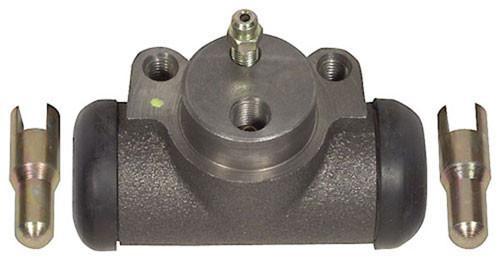
Product Description
Wheel cylinder
Frequently Asked Questions
Q: What type of component is the BP-1629 and what does it do?
A: The BP-1629 is a brake wheel cylinder used in hydraulic brake systems on forklifts and material handling equipment. It receives pressurized brake fluid from the master cylinder and uses internal pistons to mechanically apply brakes at the wheel.
Q: What equipment brands are compatible with the BP-1629?
A: The BP-1629 is compatible with forklifts from Crown, Toyota, Raymond, Yale, Hyster, Jungheinrich, Linde, Clark, Mitsubishi, CAT, and BT. Verify your specific model, serial number range, and brake system configuration before ordering to confirm fitment.
Q: What maintenance extends the service life of the BP-1629?
A: Keep brake fluid clean and dry. Change fluid at manufacturer-recommended intervals, typically every 1 to 2 years. Inspect the BP-1629 for external leaks, rust, or physical damage during routine brake system checks. Contaminated or moisture-laden fluid degrades seals rapidly and shortens cylinder life.
Q: What indicates the BP-1629 seal kit versus full replacement is needed?
A: If external leakage is the only symptom and the bore shows no scoring, rust, or pitting, a seal kit may suffice. However, if the pedal is soft, braking is weak or delayed, or the bore is corroded, the cylinder must be replaced as a complete assembly. Consult technical guidance or our parts team for your specific situation.
Q: What are the pressure and temperature ratings for the BP-1629?
A: Pressure and temperature ratings depend on your forklift brake system design. Most industrial forklifts operate at 800 to 1500 PSI and are rated for ambient temperatures of -20 degrees to 140 degrees Fahrenheit. Verify specific ratings in your equipment manual or contact our parts team.
Q: How do I know if brake fluid leaking from the BP-1629 is internal or external?
A: External leakage is visible fluid weeping from the cylinder body, port connections, or bleeder screw. Internal leakage causes a soft brake pedal but no visible fluid loss outside the cylinder. If you notice soft braking without external leaks, internal seal failure is likely and replacement is necessary.