

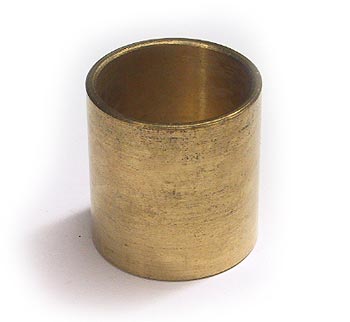
Bushing for Bt L 2000 and L 2300 Pallet Jacks
BT 47167
Guaranteed Fit. If it doesn’t fit equipment that matches the listing on this page, we’ll exchange or refund it: no restocking fee, return shipping on us. How it works
Not sure it fits? Check it with us before you buy. Once we confirm the fit in writing, it’s guaranteed for your machine.
Couldn't load pickup availability
- Expert support & fitment help
- 30-day returns
- Fast Shipping
Compatibility
|
Make |
|
|---|---|
|
Model |
|
Visit our diagram page for part references to popular models
Product Description
BT 47167 Bushing is an OEM axle bushing for BT L 2000 and BT L 2300 manual pallet jack frames, designed for precise fitment as a torsion tube bushing. Applicable to BT L 2000 Series (Series 1-11) and BT LHM230 (up to serial number 3299999). No cross-reference or superseded part numbers are published for this SKU.
Compatibility: Fits pallet jacks made by BT, model L2000. SKU: BT 47167
Specifications
Part Numbers
| OEM Part Number | BT 47167 |
| Manufacturer Compatibility | Suitable for BT L2000 Series (Series 1-11) and BT L2300 Series pallet trucks |
| Model Compatibility | Fits BT L 2000 and BT LHM230 up to serial number 3299999 |
Frequently Asked Questions
Q: What is the BT 47167 bushing and where is it installed?
A: The BT 47167 is an OEM axle bushing that functions as a pivot guide or torsion tube bushing in the BT manual pallet jack frame. It provides precise fitment and controlled movement in the linkage assembly.
Q: Which BT pallet jack models and serial ranges accept the BT 47167?
A: The BT 47167 is compatible with BT L2000 Series (Series 1 through Series 11) and BT L2300 Series manual pallet jacks. For the BT LHM230, this bushing fits units with serial numbers up to 3299999. Verify your serial number range before ordering.
Q: Are there cross-reference or superseded part numbers for the BT 47167?
A: No cross-reference or superseded part numbers are published for the BT 47167. This OEM designation stands alone with no equivalent alternatives on file.
Q: What symptoms indicate a worn BT 47167 bushing?
A: Worn BT 47167 bushings cause excessive play in the torsion tube, clunking or rattling sounds during operation, uneven mast alignment, or binding in raise and lower cycles. Inspect by checking for vertical or lateral movement at the torsion tube connection.
Q: Is the BT 47167 bushing a wear item?
A: Yes. The BT 47167 is a wear item that degrades through repetitive flexing and friction. Pallet jacks in continuous-use environments or outdoor conditions require more frequent bushing replacement than intermittent indoor units.