
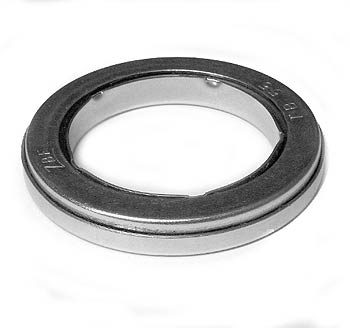
Traverse Bearing for BT L2000, L2300, 1000-U and L2300-U
BT 22052
Guaranteed Fit. If it doesn’t fit equipment that matches the listing on this page, we’ll exchange or refund it: no restocking fee, return shipping on us. How it works
Not sure it fits? Check it with us before you buy. Once we confirm the fit in writing, it’s guaranteed for your machine.
Couldn't load pickup availability
- Expert support & fitment help
- 30-day returns
- Fast Shipping
Compatibility
|
Make |
|
|---|---|
|
Model |
|
Visit our diagram page for part references to popular models
Product Description
BT 22052 Traverse Bearing is an OEM component for manual pallet jacks, specifically designed for BT L2000, L2300, L2000-U, and L2300-U models. Manufactured from hardened bearing steel, this traverse bearing facilitates traverse linkage operation between the hydraulic unit and main frame, ensuring precise load handling. Equivalent to Toyota 00590-53386-71.
Compatibility: Fits pallet jacks made by BT, model L2000, L2300, L2000-U, L2300-U. Alternate model: L2000,L2300,L2000U,L2300U; L2000, L2300, L2000 U, L2300 U. SKU: BT 22052
Specifications
Material
| Material Specification | Hardened bearing steel |
Part Numbers
| Part Number | BT 22052 |
| Manufacturer Part Number | 22052 |
| Cross-Reference Part Numbers | Toyota 00590-53386-71 |
| Compatible Models | BT L2000, L2300, L2000-U, L2300-U manual pallet jacks |
| Alternative Part Numbers | BT22052, 22052 |
Frequently Asked Questions
Q: What is the BT 22052 Traverse Bearing?
A: The BT 22052 is a traverse bearing manufactured from hardened bearing steel. It connects the hydraulic unit linkage to the main frame in BT manual pallet jacks, enabling smooth traverse operation and precise load handling during lateral movement.
Q: Which BT pallet jack models use the BT 22052 bearing?
A: The BT 22052 fits BT manual pallet jack models L2000, L2300, L2000-U, and L2300-U. Confirm your equipment model before ordering to ensure correct fitment in the traverse linkage assembly.
Q: What material is the BT 22052 made from?
A: The BT 22052 is manufactured from hardened bearing steel to withstand lateral loads and repetitive traverse cycles. Material hardness is critical for durability under the side-to-side forces applied during load positioning.
Q: Is there a Toyota cross-reference for the BT 22052?
A: Yes, the BT 22052 is equivalent to Toyota part number 00590-53386-71. Both numbers reference the same bearing component, though BT 22052 is the correct identifier for BT Prime Mover equipment.
Q: What symptoms indicate the BT 22052 bearing needs replacement?
A: Replace the bearing if you observe excessive play in traverse operation, grinding or squeaking noises during lateral movement, or uneven load positioning. Bearing wear increases friction and reduces precise load handling capability.