
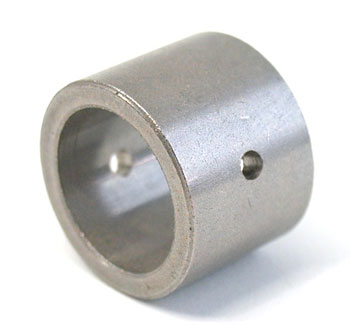
Guide Bushing for BT Prime Mover Electric Lift Truck
BT 49929-03
Guaranteed Fit. Check fit with us before you buy. If we confirm it fits your machine and it doesn’t, we’ll exchange or refund it: no restocking fee, return shipping on us. How it works
Not sure it fits? Send us your make, model and serial number and we’ll check it before you buy.
Couldn't load pickup availability
- Expert support & fitment help
- 30-day returns
- Fast Shipping
Compatibility
|
Make |
|
|---|---|
|
Model |
- |
Visit our diagram page for part references to popular models
Product Description
BT 49929-03 guide bushing for BT electric lift trucks, OEM replacement component designed for mast or steering assemblies, manufactured from engineered bearing-grade polymer for high-load, low-friction operation.
Specifications
Material & Construction
| Material Specification | Machined bearing-grade polymer, suitable for high-load and low-friction operation |
| Finish/Coating | Self-lubricating polymer finish, no additional surface coating |
Part Numbers & Compatibility
| OEM Part Number | BT 49929-03 |
| Application | Compatible with BT electric lift truck models requiring guide bushing under part number 49929-03 |
Frequently Asked Questions
Q: What is the BT 49929-03 guide bushing?
A: The BT 49929-03 is an OEM replacement guide bushing for BT electric lift trucks. It is designed for mast or steering assemblies and is manufactured from engineered bearing-grade polymer with a self-lubricating finish for high-load, low-friction operation.
Q: Which BT electric lift truck models use the BT 49929-03?
A: The BT 49929-03 fits BT electric lift truck models requiring part number 49929-03 in their mast or steering assembly. Verify your specific lift truck model and serial range against your equipment documentation to confirm compatibility.
Q: What material is the BT 49929-03 made from?
A: The BT 49929-03 is machined from bearing-grade engineered polymer featuring a self-lubricating finish. This material is selected for its ability to handle high loads and maintain low-friction operation without requiring external lubrication.
Q: Does the BT 49929-03 require lubrication?
A: The BT 49929-03 does not require supplemental lubrication due to its self-lubricating polymer composition. Over-lubrication can attract dirt and cause accelerated wear. Follow your lift truck maintenance schedule recommendations.
Q: How often should the BT 49929-03 guide bushing be replaced?
A: Replace the BT 49929-03 if you observe lateral mast movement, squeaking, or stiction in the mast or steering assembly. Typical service life is 3-6 years depending on frequency of mast cycle operation and application intensity.