

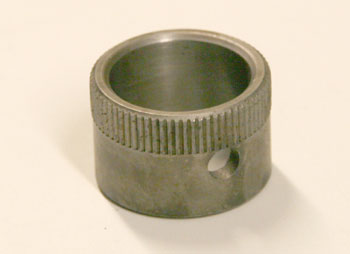
Hyster Bushing for W40Z W45Z
HY 2039225
Couldn't load pickup availability
- Expert support & fitment help
- 30-day returns
- Fast Shipping
Compatibility
|
Make |
|
|---|---|
|
Model |
|
Visit our diagram page for part references to popular models
Product Description
OEM Grade Hyster bushing, part number HY 2039225, engineered for electric lift truck models W40Z and W45Z. Designed for application in steer and pivot assemblies, this part ensures precision fit and longevity under demanding industrial conditions.
Specifications
Part Numbers & Compatibility
| Make | Hyster |
| Model | W40Z, W45Z |
| Part Number | HY 2039225 |
Frequently Asked Questions
Q: Which Hyster electric lift truck models does the HY 2039225 bushing fit?
A: The HY 2039225 is engineered for Hyster W40Z and Hyster W45Z electric lift trucks. This bushing is designed for steer and pivot assemblies in these specific models.
Q: What is the purpose of this bushing in steer and pivot assemblies?
A: The HY 2039225 provides a wear-resistant bearing surface in steering and pivot connections. It absorbs rotational stress, reduces friction between moving components, and maintains alignment and precision fit at these critical articulation points.
Q: Is the HY 2039225 compatible with other Hyster models outside the W40Z and W45Z?
A: The HY 2039225 is specified for W40Z and W45Z models. While dimensional similarity may exist with other Hyster lines, we recommend confirming compatibility with your specific truck model and serial number.
Q: What signs indicate the HY 2039225 bushing is worn and needs replacement?
A: Watch for loose or spongy steering response, clunking sounds during turning or pivoting, visible play at steer or pivot joints, or uneven tire wear on steering wheels. These symptoms indicate bushing degradation and require prompt replacement to prevent further component damage.
Q: Are there any cross-reference part numbers or superseded versions of the HY 2039225?
A: No cross-reference numbers or superseded alternatives are currently documented for the HY 2039225. The part number remains the standard identifier. Verify your specific truck serial range to confirm this is the correct bushing for your equipment.
Q: How do I know if I need to replace the HY 2039225 bushing?
A: Inspect for signs of wear such as looseness, play, or unusual noises during operation. If the bushing is damaged or shows signs of degradation, it should be replaced to maintain optimal performance and safety.