

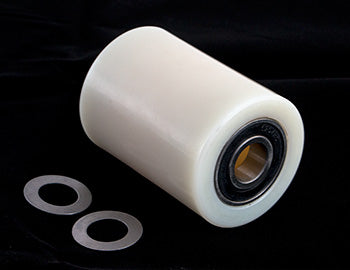
Solid Nylon Load Wheel Assembly for Clark Manual Pallet Jack
CL 1806293
Guaranteed Fit. If it doesn’t fit equipment that matches the listing on this page, we’ll exchange or refund it: no restocking fee, return shipping on us. How it works
Not sure it fits? Check it with us before you buy. Once we confirm the fit in writing, it’s guaranteed for your machine.
Couldn't load pickup availability
- Expert support & fitment help
- 30-day returns
- Fast Shipping
Compatibility
|
Make |
|
|---|---|
|
Model |
|
Visit our diagram page for part references to popular models
Product Description
Load wheel assy solid nylon
Specifications
Material & Construction
| Material | Nylon |
| Construction | Solid nylon throughout (no separate core) |
Part Numbers & Compatibility
| Make | Clark |
| Model | CGH23, CGH25 |
Wheel Dimensions
| Outside Diameter | 3 in |
| Width | 3.75 in |
Performance Specifications
| Wet Floor Performance | Suitable - nylon is non-hygroscopic |
| Cold Temperature Limit | Not recommended below 0°F sustained exposure |
Additional Specifications
| Best Application | Manual pallet jacks, light-duty stackers on smooth warehouse flooring |
| Product Type | Load Wheel Assembly |
| Weight Class | Light to medium duty |
| Noise Level | Low (reduced compared to metal wheels) |
| Friction | Low friction operation |
| Abrasion Resistance | Lower than polyurethane - best for smooth floors |
| Typical Lifespan | 1-3 years under normal light-to-medium duty warehouse use |
Frequently Asked Questions
Q: What makes and models are compatible with this part?
A: This replacement part is compatible with Clark manual pallet jack models CGH23 and CGH25.
Q: What material is this part made from?
A: This part is made from nylon, offering durability and performance in various warehouse environments.
Q: What are the benefits of using nylon in this part?
A: Nylon provides low friction, reduced noise, and lightweight construction, making it suitable for light to medium duty applications.
Q: Is this part suitable for cold storage environments?
A: Nylon can perform in wet floor conditions, but it may become brittle at sustained temperatures below 0 degrees Fahrenheit. For cold storage use, consult specifications or contact our parts team.
Q: How does this part compare to other materials?
A: Nylon is best suited for smooth warehouse floors, while polyurethane offers better cut and tear resistance for rougher environments.
Q: When should this replacement part be replaced?
A: Replace this part when signs of wear or damage appear.