

Battery Connectors for Toyota Electric Lift Truck
00591-08798-81
Couldn't load pickup availability
- Expert support & fitment help
- 30-day returns
- Fast Shipping
Compatibility
|
Make |
- |
|---|---|
|
Model |
- |
Visit our diagram page for part references to popular models
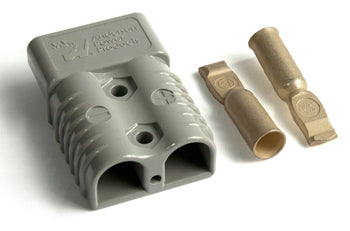
Product Description
CONNECTOR (SB175 1/0 GRAY)
Frequently Asked Questions
Q: What is the difference between SB175 1/0 and SB350 2/0 connectors?
A: The SB175 1/0 connector uses 1/0 gauge cable rated for approximately 100-150 amperes, while the SB350 2/0 uses heavier 2/0 gauge rated for 150-200 amperes. SB175 connectors are physically smaller and are used on smaller lift trucks, pallet jacks, and stackers. Do not interchange these connector types.
Q: Which lift truck models use the SB175 1/0 gray connector?
A: The SB175 1/0 gray connector is used on smaller electric lift trucks and walk-behind stackers from manufacturers including Crown, Toyota, and Raymond. Gray is typically a standard color designation for this connector series. Verify your equipment model number against the connector specification sheet before ordering.
Q: Can I use a 1/0 gauge connector on equipment that originally had a 2/0?
A: No. Downgrading from 2/0 to 1/0 gauge will cause excessive connection resistance, voltage drop, and heat generation at the terminal. This will result in reduced lift truck performance, slower charging, and potential fire risk. Always match the gauge specification of your original connector.
Q: What does the gray color indicate on this connector?
A: Gray is a standard color designation for SB175 series connectors. Unlike the blue and red positive/negative coding on SB350 connectors, gray SB175 connectors may indicate either polarity depending on your equipment manufacturer. Always consult your lift truck manual to verify correct polarity before installation.
Q: What maintenance is required for this connector?
A: Inspect the connector monthly for corrosion, discoloration, or loose connections. Clean any white or green corrosion deposits using a soft brush and battery terminal cleaner. Apply dielectric grease annually. In cold storage, check for ice formation inside the barrel quarterly.
Q: How do I crimp a 1/0 gauge connector to battery cable?
A: Strip 0.375 inches of insulation from the 1/0 gauge cable. Place the cable fully into the connector barrel and crimp using a medium-duty 1/0 gauge rated crimping tool. Make two firm crimp compressions to ensure good electrical contact. Test the connection for pull-out resistance before applying dielectric grease.