

OEM Power Connector SB175 Series for Electric Lift Trucks
220052032
Couldn't load pickup availability
- Expert support & fitment help
- 30-day returns
- Fast Shipping
Compatibility
|
Make |
- |
|---|---|
|
Model |
- |
Visit our diagram page for part references to popular models
Product Description
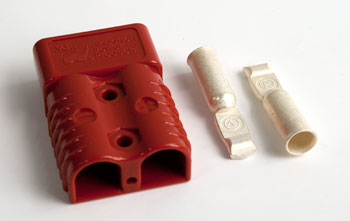
OEM power connector for electric lift truck applications. Heavy-duty 2-pole SB175 series, rated 175A at 600V, accepts 1/0 AWG cable. Interchangeable with Anderson Power Products SB175 red and SMH 6331G1. Constructed with silver-plated T2 copper contacts, polycarbonate housing, and mechanical keying for safety.
Specifications
Electrical Specifications
| Rated Current | 175A (continuous) |
| Rated Voltage | 600VDC/AC |
Material & Construction
| Shell Material | Polycarbonate (PC) |
Mechanical Specifications
| Mating Cycles | ≥10,000 |
Part Numbers
| Manufacturer Part Number | 220052032 |
Frequently Asked Questions
Q: What are the current and voltage ratings for OEM connector 220052032?
A: Part 220052032 is rated for 175A continuous current and maximum voltage of 600V DC or AC. This 2-pole SB175 series connector accepts 1/0 AWG cable and is rated for 10,000 mating cycles.
Q: Is connector 220052032 interchangeable with Anderson Power Products connectors?
A: Yes. Part 220052032 is mechanically and electrically interchangeable with Anderson Power Products SB175 red connector and SMH 6331G1. Cross-verify connector color, housing style, and contact configuration before substitution.
Q: What materials are used in the construction of connector 220052032?
A: Part 220052032 features polycarbonate housing for durability and impact resistance, with silver-plated T2 copper contacts for electrical performance. The connector includes mechanical keying for safety and proper orientation during mating.
Q: Which electric lift truck brands are compatible with connector 220052032?
A: The 220052032 OEM connector is compatible with Crown, Toyota, Raymond, Yale, Hyster, Jungheinrich, Linde, Clark, Mitsubishi, CAT, and BT electric lift trucks. Verify your equipment voltage and current specifications match the 600V and 175A ratings.
Q: How many mating cycles is connector 220052032 rated for?
A: Part 220052032 is rated for 10,000 mating cycles. This represents the connector being disconnected and reconnected 10,000 times under normal operating conditions before contact wear becomes significant.