

Battery Connectors for Electric Lift Truck
41-25167
Couldn't load pickup availability
- Expert support & fitment help
- 30-day returns
- Fast Shipping
Compatibility
|
Make |
|
|---|---|
|
Model |
- |
Visit our diagram page for part references to popular models
Product Description
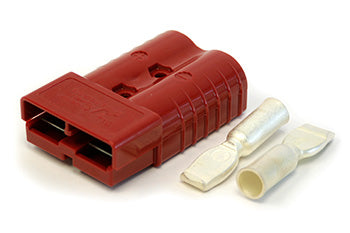
The SB350 2/0 Red connector is a high-amperage battery connector designed for electric forklifts, reach trucks, electric pallet jacks, order pickers, and other powered material handling equipment. This red-colored connector handles up to 350 amps and is rated for 12V to 80V systems, making it ideal for industrial-duty battery applications. The 2/0 cable gauge ensures reliable power delivery in demanding warehouse and logistics environments. Direct replacement connector for Anderson SB series battery systems across multiple lift truck manufacturers.
Specifications
Product Overview
| Part Number | 41-25167 |
Physical Specifications
| Connector Type | Anderson SB350 Series |
| Color Designation | Red (Positive Pole) |
| Cable Gauge | 2/0 AWG |
| Current Rating | 350 Amps Maximum |
| Voltage Range | 12V to 80V |
| Housing Material | Polycarbonate |
| Contact Type | Anderson SB Series Gold-Plated Contacts |
Compatibility
| Compatible Equipment | Electric Forklifts, Reach Trucks, Electric Pallet Jacks, Order Pickers, Stackers |
| Compatible Manufacturers | Crown, Toyota, Raymond, Yale, Hyster, Jungheinrich, Linde, Clark, Mitsubishi, CAT, BT |
Frequently Asked Questions
Q: What is the polarity designation for the red SB350 2/0 connector?
A: The red color indicates the positive pole of the SB350 2/0 battery connector system. Red is the standard positive pole designation in Anderson SB series connectors. Always connect red to the designated positive terminal to maintain proper polarity and electrical system safety.
Q: Which electric lift trucks use the SB350 2/0 Red connector?
A: The SB350 2/0 Red connector is compatible with electric forklifts, reach trucks, electric pallet jacks, and order pickers from Crown, Toyota, Raymond, Yale, Hyster, Jungheinrich, Linde, Clark, Mitsubishi, CAT, and BT. Verify your equipment voltage and model specifications before ordering.
Q: What is the current rating of the SB350 2/0 Red connector?
A: The 41-25167 is rated for 350 amps maximum current at voltages ranging from 12V to 80V. The 2/0 cable gauge and SB350 designation ensure safe operation for high-amperage battery systems in industrial material handling equipment.
Q: Can I use the red SB350 2/0 connector as a replacement for gray or blue connectors?
A: No. Do not interchange red, gray, and blue connectors. Each color designates a specific pole and polarity. Connecting red to the wrong terminal reverses polarity and can damage the charging system, battery, or lift truck electrical components. Use only the correct color for each designated connection point.
Q: How do I know when the SB350 2/0 Red connector needs replacement?
A: Replace the connector immediately if you observe pitting, corrosion, or discoloration on the contact surfaces, cracks or damage to the polycarbonate housing, loose connections that do not hold tight, or failure to establish electrical contact. Regular visual inspection before each charging cycle helps identify wear early.