

Electric Lift Truck Connectors - Technical Specifications
800049552
Couldn't load pickup availability
- Expert support & fitment help
- 30-day returns
- Fast Shipping
Compatibility
|
Make |
- |
|---|---|
|
Model |
- |
Visit our diagram page for part references to popular models
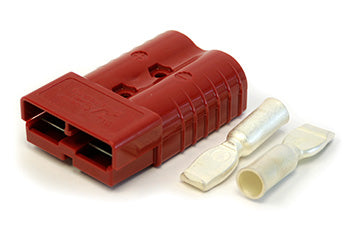
Product Description
Technical specifications for electric lift truck connectors
Specifications
Electrical
| Example Current Rating | Up to 450 amps with 4/0 AWG wire (example for SB350 connectors) |
Material
| Housing Material | PC or PBT/PC blend (example for SB350 connectors) |
Frequently Asked Questions
Q: What current capacity does an SB350 connector with 4/0 AWG wire support?
A: SB350 connectors with 4/0 AWG wire support up to 450 amps maximum current. This larger gauge accommodates high-amperage circuits in electric lift trucks with extended runtime requirements.
Q: What materials are used for SB350 connector housings?
A: SB350 connectors use polycarbonate (PC) or a PBT/PC (polybutylene terephthalate and polycarbonate) blend for housing. These materials provide impact resistance, chemical resistance, and durability in warehouse, outdoor, and cold storage environments.
Q: How does conductor size (wire gauge) impact electrical performance?
A: Larger conductors (4/0 AWG versus 2/0 AWG) have lower electrical resistance and generate less heat at the same current. The connector rating must match both wire gauge and circuit amperage to prevent overheating and failures.
Q: What are common applications for SB350 connectors in lift trucks?
A: SB350 connectors are used for main power distribution from battery to motor, battery charger connections, auxiliary circuit power, and control system connections in electric pallet jacks, stackers, reach trucks, and walkie riders.
Q: How do I determine the correct connector wire gauge for my equipment?
A: Check the wire gauge marked on existing cables (2/0, 3/0, or 4/0 AWG). Select a replacement connector rated for that exact gauge. Verify voltage (typically 24V-80V DC for battery circuits) and ensure current capacity matches your equipment circuit.
Q: How often should SB350 connectors be inspected or maintained?
A: Inspect connectors periodically for corrosion, loose contacts, cracks in housing, or burn marks. Clean dry contacts if contaminated. Replace connectors showing burn marks, pitting on contacts, or cracked housings to prevent electrical failures.