

Albright moving contact assembly for lift trucks
AL 2180-30
Couldn't load pickup availability
- Expert support & fitment help
- 30-day returns
- Fast Shipping
Compatibility
|
Make |
|
|---|---|
|
Model |
- |
Visit our diagram page for part references to popular models
Product Description
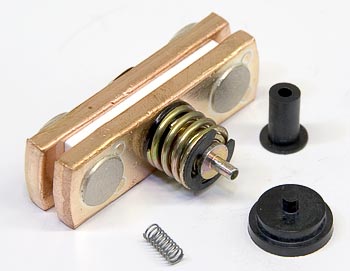
Albright AL 2180-30 Moving Contact Assembly is a silver alloy tipped double-acting contact assembly designed for use in electric lift truck contactors. The assembly features high conductivity, weld-resistant tips, large contact area, and robust copper/steel construction for long service life in industrial lift truck electrical systems.
Specifications
Part Numbers & Compatibility
| Make | Albright |
| Manufacturer Part Number | 2180-30 |
| Application | Electric lift truck contactors |
Additional Specifications
| Spindle Material | Steel |
| Features | High conductivity, weld-resistant tips, large contact area, robust copper/steel construction |
Frequently Asked Questions
Q: What makes the AL 2180-30 suitable for electric lift truck contactors?
A: The AL 2180-30 is designed as a general-purpose double-acting moving contact assembly for electric lift truck contactors. It features high conductivity, weld-resistant tips, and a robust copper/steel construction to ensure long service life in industrial electrical systems.
Q: What materials are used in the AL 2180-30 moving contact assembly?
A: The AL 2180-30 uses silver alloy contact tips for high electrical conductivity and weld resistance, along with a copper and steel spindle to provide structural strength. This combination ensures both electrical performance and durability in industrial applications.
Q: How do I know if the AL 2180-30 is compatible with my lift truck?
A: The AL 2180-30 is designed for use in electric lift truck contactors. To confirm compatibility, cross-reference your specific contactor model against the assembly pocket dimensions and electrical requirements.
Q: What factors influence the service life of the AL 2180-30?
A: Service life depends on load current, switching frequency, ambient temperature, and moisture exposure. The weld-resistant and high-conductivity materials support extended service intervals, but replacement is necessary when visual arcing damage appears on the contact surfaces or electrical resistance increases beyond specification.
Q: What should I do if the AL 2180-30 needs replacement?
A: When replacing the AL 2180-30, ensure you have the correct part number and verify compatibility with your lift truck's contactor system. Always follow proper safety procedures when handling electrical components.