

Contactor for Crown Electric Lift Truck
CR 93576
Couldn't load pickup availability
- Expert support & fitment help
- 30-day returns
- Fast Shipping
Compatibility
|
Make |
|
|---|---|
|
Model |
|
Visit our diagram page for part references to popular models
Product Description
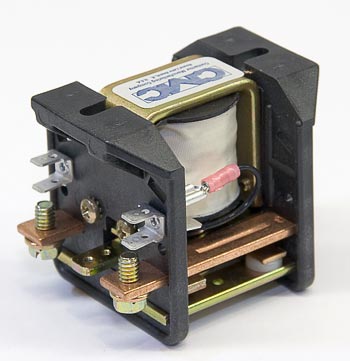
Crown CR 93576 is a 24VDC blade style forward-reverse contactor designed for electric lift trucks. Suitable for panel mounted applications, the contactor features screw terminals and electromagnetic actuation, with a nominal 75 amp current rating for typical electric truck controls.
Specifications
Electrical
| Coil Voltage | 24VDC |
| Control Voltage | 24VDC |
Part Numbers
| OEM Part Number | CR 93576 |
| Manufacturer Part Number | 093576 |
| Alternate Part Numbers | CR93576, 093576 |
Frequently Asked Questions
Q: What is the CR 93576 and what electric trucks does it fit?
A: The CR 93576 is a 24VDC blade-style forward-reverse contactor for panel-mounted applications on Crown electric lift trucks. It switches traction motor circuits through electromagnetic coil actuation and handles 75A continuous current.
Q: What are the CR 93576 specifications and electrical ratings?
A: Coil voltage and control voltage is 24VDC. Current rating is 75A. Design is blade-style forward-reverse. Terminal type is screw terminals for panel-mount connections. Operating duty is traction motor control on electric lift trucks.
Q: Is the CR 93576 the same as part number 093576 or CR93576?
A: Yes. CR 93576, 093576, and CR93576 are equivalent part numbers for the same contactor. Any of these references confirm you are ordering the correct component. All refer to the Crown OEM specification.
Q: What is the difference between CR 93574, CR 93575, and CR 93576 contactors?
A: All three are 24VDC blade-style forward-reverse contactors with 75A ratings. The differences are OEM specifications for different Crown truck models and control panel configurations. Each is optimized for specific equipment. Do not interchange without confirming fitment.
Q: How long does a CR 93576 contactor typically last?
A: Contactor lifespan depends on switching frequency, load duty, and maintenance. Typical service life is 3-5 years under normal industrial use. Contact wear accelerates with heavy duty cycles. Replace immediately if forward-reverse response becomes erratic or fails.