

Contactor for Crown
CR110613-03
Guaranteed Fit. Check fit with us before you buy. If we confirm it fits your machine and it doesn’t, we’ll exchange or refund it: no restocking fee, return shipping on us. How it works
Not sure it fits? Send us your make, model and serial number and we’ll check it before you buy.
Couldn't load pickup availability
- Expert support & fitment help
- 30-day returns
- Fast Shipping
Compatibility
|
Make |
|
|---|---|
|
Model |
- |
Visit our diagram page for part references to popular models
Product Description
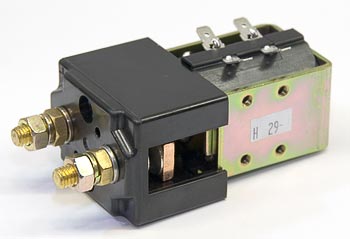
OEM Crown CR110613-03 lift truck contactor; 24VDC coil, 150A continuous duty, large tip SPNO configuration; supersedes part number 110613-003. Suitable for Crown electric lift truck model requiring 24V lift circuit contactors.
Specifications
Part Numbers & Compatibility
| Make | Crown |
| Part Number | CR110613-03 |
| Manufacturer Part Number | 110613-003 |
| Cross-Reference Part Numbers | Supersedes 110613-01, 110613-003 |
Electrical Specifications
| Coil Voltage | 24 VDC |
| Continuous Current Rating | 150 A |
| Control Circuit Voltage | 24 VDC |
Additional Specifications
| Insulation Material | High-dielectric molded polymer |
Frequently Asked Questions
Q: What model is the CR110613-03 contactor compatible with?
A: The CR110613-03 is compatible with Crown electric lift truck model.
Q: What material is used in the CR110613-03 coil?
A: The CR110613-03 features high-dielectric molded polymer insulation in the coil, ensuring reliable electrical isolation and durability in challenging environments.
Q: How do I know when to replace the CR110613-03 contactor?
A: Replace the CR110613-03 contactor if you notice signs of failure such as degraded contacts, insulation damage, or performance issues in the lift circuit.
Q: What is the continuous current rating of the CR110613-03?
A: The CR110613-03 is rated for 150A continuous duty, allowing it to safely carry 150 amperes indefinitely under normal operating conditions.
Q: Does the CR110613-03 have any equivalent or superseded part numbers?
A: Yes, the CR110613-03 supersedes Crown part numbers 110613-01 and 110613-003. Use CR110613-03 as the current cross-reference for replacements.