

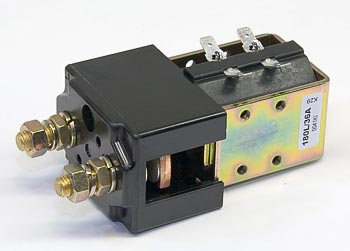
Albright sw180 contactor for electric lift trucks
AL SW180-36
Couldn't load pickup availability
- Expert support & fitment help
- 30-day returns
- Fast Shipping
Compatibility
|
Make |
|
|---|---|
|
Model |
- |
Visit our diagram page for part references to popular models
Product Description
Albright SW180 series contactor specifications for electric lift truck applications
Specifications
Part Numbers & Compatibility
| Make | Albright |
| Cross-Reference Part Numbers | ALSW180-36, ALSW18036, SW18036 |
Electrical Specifications
| Voltage Range | 36/48 Volts |
| Rated Current | 200A for resistive loads, 150A for inductive/capacitive |
| Coil Voltage Options | 6 - 240V |
| Typical Voltage Drop | 40mV per pole at 150A |
Additional Specifications
| Equipped For | Albright SW180 |
| Mechanical Durability | > 5,000,000 cycles |
Frequently Asked Questions
Q: What makes and models is the AL SW180-36 compatible with?
A: The AL SW180-36 is designed for use in Albright electric lift trucks. Ensure compatibility with your specific model by checking the equipment specifications.
Q: What materials is the AL SW180-36 made from?
A: The AL SW180-36 is constructed with durable materials to ensure long-term performance in industrial environments. It features a robust design suitable for frequent use.
Q: How do I know when to replace the AL SW180-36?
A: Replace the AL SW180-36 if you notice signs of wear, such as excessive voltage drop, poor contact performance, or reduced mechanical durability. Regular inspection and maintenance are recommended.
Q: What cross-reference part numbers match the AL SW180-36?
A: The AL SW180-36 is equivalent to alsw180-36, alsw18036, and sw18036. All reference the same Albright sw180 series contactor for 36/48-volt electric lift trucks.
Q: Is the AL SW180-36 suitable for wet environments or cold storage?
A: Standard contactors perform best in dry environments. If your lift truck operates in wet or cold storage conditions, verify enclosure rating and terminal sealing. Corrosion accelerates contact failure in high-moisture or freezing environments.
Q: What is the mechanical durability rating for the AL SW180-36?
A: The AL SW180-36 exceeds 5 million mechanical cycles. Lifespan depends on electrical load type, switching frequency, and preventive maintenance such as keeping terminals clean and connections tight.