

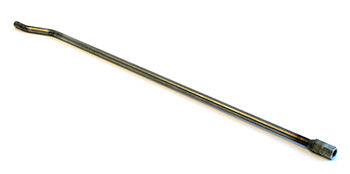
Control Rod for Blue Giant PT-50 and PT-55
BG 794-363
Couldn't load pickup availability
- Expert support & fitment help
- 30-day returns
- Fast Shipping
Compatibility
|
Make |
|
|---|---|
|
Model |
- |
Visit our diagram page for part references to popular models
Product Description
Blue Giant Control Rod (BG 794-363) is a machined steel actuator rod designed for PT-50 and PT-55 manual pallet trucks. Functions as the primary linkage between handle and hydraulic release assembly, compatible only with Blue Giant OEM configuration.
Compatibility: Fits pallet jacks made by Blue Giant, model PT-50 and PT-55. Alternate model: PT50andPT55; PT 50 and PT 55. SKU: BG 794-363
Specifications
Material & Construction
| Material Specification | Machined steel rod with hardened bearing surfaces |
Part Numbers
| OEM Part Number | BG 794-363 |
Frequently Asked Questions
Q: Which Blue Giant pallet jack models use the BG 794-363 control rod?
A: The BG 794-363 is compatible with Blue Giant PT-50 and PT-55 manual pallet jacks. Alternate model designations include PT50andPT55, PT 50, and PT 55. Verify your equipment serial range before ordering to ensure correct fitment.
Q: What material is the BG 794-363 control rod manufactured from?
A: The BG 794-363 is fabricated from machined steel with hardened bearing surfaces. This material composition provides wear resistance and durability under repeated hydraulic actuation cycles in material handling environments.
Q: What is the function of the BG 794-363 in the pallet jack assembly?
A: The BG 794-363 serves as the primary mechanical linkage between the operator handle and the hydraulic release assembly. It translates handle movement into precise hydraulic valve actuation, enabling controlled lowering and raising of the load.
Q: Can the BG 794-363 be used on non-Blue Giant pallet jacks?
A: No. The BG 794-363 is designed exclusively for Blue Giant OEM configuration and will not fit other manufacturers equipment. Cross-compatibility with Crown, Toyota, Raymond, Yale, or Hyster models is not possible due to proprietary mounting geometry and bearing specifications.
Q: How long does the BG 794-363 control rod typically last?
A: With proper maintenance and normal use, the machined steel construction provides several years of service life. Lifespan depends on frequency of use, load profile, and storage conditions. Inspect periodically for binding, wear on bearing surfaces, or visible damage.