

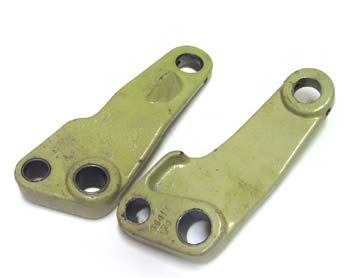
Crown load roller bracket for PTH50 pallet jacks
CR 44501
Couldn't load pickup availability
- Expert support & fitment help
- 30-day returns
- Fast Shipping
Compatibility
|
Make |
|
|---|---|
|
Model |
|
Visit our diagram page for part references to popular models
Product Description
Crown CR 44501 Load Roller Bracket (Pair) is an OEM replacement assembly for Crown PTH50 manual pallet jacks (newer model version), constructed from high-strength formed steel with a corrosion-resistant finish. Engineered for direct fitment, these brackets provide critical alignment and support for load rollers. The part is referenced as Items 20 and 25 in the factory frame diagram. Bracket mounts at the lower fork section, interfacing with OE axle, cotter pin and washer hardware.
Compatibility: Fits pallet jacks made by Crown, model PTH50. SKU: CR 44501
Specifications
Material & Construction
| Material | High-strength formed steel with a corrosion-resistant finish |
Part Numbers & Compatibility
| Make | Crown |
| Model | PTH50 |
| Part Number | CR 44501 |
| Cross-Reference Part Numbers | Crown 44501, CR44501 |
Additional Specifications
| Component Reference | Corresponds to items 20 and 25 in manufacturer parts diagrams |
| Compatible with Models | Crown PTH50 (newer version) |
| Mounting Location | Lower fork section |
Frequently Asked Questions
Q: What models is the CR 44501 compatible with?
A: The CR 44501 is designed for Crown PTH50 manual pallet jacks. Verify your model and parts diagram before ordering to ensure compatibility.
Q: What material is the CR 44501 made from?
A: The CR 44501 is constructed from high-strength formed steel with a corrosion-resistant finish. This material provides durability in warehouse and loading dock environments.
Q: How do I know if the CR 44501 needs replacement?
A: Inspect the brackets for signs of bending, cracks, or wear. If they show damage, replace them as a pair to maintain proper alignment and structural integrity.
Q: What hardware is included with the CR 44501?
A: The CR 44501 mounts using original equipment axles, cotter pins, and washers. Ensure all hardware is in place and properly secured during installation.
Q: Why is alignment important for the CR 44501?
A: Proper alignment ensures even weight distribution across the load rollers, preventing uneven wear and potential frame stress. Misalignment can lead to binding during lift cycles.