

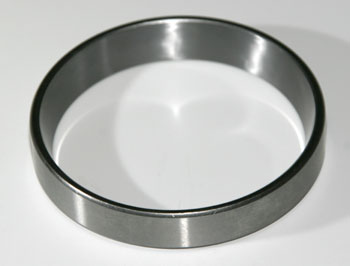
Tapered Roller Bearing Cup for Cat Caterpillar Electric Lift Truck
CT 54835
Couldn't load pickup availability
- Expert support & fitment help
- 30-day returns
- Fast Shipping
Compatibility
|
Make |
|
|---|---|
|
Model |
- |
Visit our diagram page for part references to popular models
Product Description
Caterpillar CT 54835 is a tapered roller bearing cup engineered for electric lift truck wheel assemblies, constructed from bearing-grade alloy steel with hardened, precision-ground raceways, designed for axial and radial load support. No cross-reference part numbers are available for this item.
Specifications
Material & Construction
| Material Specification | Bearing grade alloy steel |
| Contact Surface Finish | Precision ground |
Part Numbers & Compatibility
| OEM Part Number | CT 54835 |
| Manufacturer Part Number | 54835 |
Frequently Asked Questions
Q: What is the CT 54835 bearing cup designed for?
A: The CT 54835 is a tapered roller bearing cup engineered specifically for electric lift truck wheel assemblies. It functions as the outer raceway supporting both axial and radial loads during operation.
Q: What material is the CT 54835 bearing cup made from?
A: The CT 54835 is constructed from bearing-grade alloy steel with hardened, precision-ground raceways. This material composition provides the strength and accuracy required for heavy-duty material handling applications.
Q: Which Caterpillar electric lift trucks use the CT 54835 bearing cup?
A: The CT 54835 is engineered for Caterpillar electric lift truck wheel assemblies. Verify your truck model, year, and wheel assembly configuration against the bearing cup specifications before ordering.
Q: Are there cross-reference part numbers for the CT 54835?
A: No cross-reference part numbers are available for the CT 54835. This is an OEM Caterpillar component specific to their electric lift truck designs. Use the exact SKU when ordering.
Q: What are signs the CT 54835 bearing cup needs replacement?
A: Bearing cup failure symptoms include grinding noise during wheel rotation, rough or binding wheel movement, excessive lateral play in the wheel assembly, or visible spalling on the inner raceway surface. These indicate bearing replacement is required.
Q: How does bearing cup condition affect lift truck performance?
A: Worn bearing cups reduce wheel efficiency, increase rolling resistance, and can cause steering instability. This degrades operator control and accelerates additional wear on wheel assemblies and axles.