

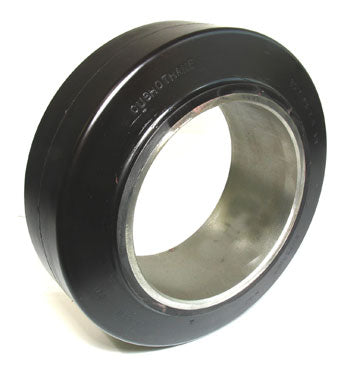
13 in. x 4.5 in. Drive Tire for Electric Lift Trucks
SU 13 X 4.5 X 8-FT-P
Couldn't load pickup availability
- Expert support & fitment help
- 30-day returns
- Fast Shipping
Compatibility
|
Make |
- |
|---|---|
|
Model |
- |
Visit our diagram page for part references to popular models
Product Description
Drive tire SU 13 X 4.5 X 8-FT-P is a flat tread polyurethane press-on wheel for electric lift trucks, engineered for 8 inch diameter steel rims, 13 inch OD, and 4.5 inch width. Constructed with a 3/8 inch steel base and non-marking high durometer poly tread, delivering low rolling resistance, precision fit, and optimal performance in warehouses and clean floor applications.
Specifications: 13.000 inch diameter x 4.500 inch width (13.000" x 4.500" | 13 x 4.5 wheel | 330.20mm x 114.30mm)
Specifications
Material
| Tire Material | Industrial-grade non-marking polyurethane |
Part Numbers
| Manufacturer Part Number | SU 13 X 4.5 X 8-FT-P |
Wheel Specifications
| Outside Diameter (in) | 13.000 |
| Width (in) | 4.500 |
| Outside Diameter (mm) | 330.20 |
| Width (mm) | 114.30 |
| Material | Polyurethane |
Frequently Asked Questions
Q: What does FT-P mean and what are the benefits of flat tread profile?
A: FT-P stands for flat tread polyurethane. The tire maintains constant width from the tread edge to the hub bore, unlike tapered side wall (TSW) tires which angle inward. Flat tread benefits include (1) better sidewall support on dished or curved rims, (2) even pressure distribution across the rim contact area, (3) reduced sidewall stress in applications with lateral loading, and (4) improved performance on non-standard rim geometries. Flat tread costs more than TSW but is necessary when rims are dished. Do not use flat tread on flat rims as it provides excessive sidewall extension and reduces stability.
Q: Is this tire non-marking and suitable for clean room or food processing environments?
A: The SU 13 X 4.5 X 8-FT-P is constructed with non-marking, high durometer polyurethane as specified in the product description. Non-marking means the tire does not leave visible marks on clean floors. This tire is suitable for pharmaceutical warehouses, food processing facilities, and showroom environments where marking is unacceptable. The high durometer poly compound is harder and more durable than standard poly, providing extended life in these clean-floor applications. Verify non-marking compliance with your facility standards before widespread deployment. New tires perform better than aged tires regarding marking.
Q: What is the 3/8 inch steel base specification and why does it matter?
A: The 3/8 inch steel base is a reinforcement layer bonded to the bottom of the polyurethane tread. This steel core provides structural support, prevents permanent deformation under load, and distributes pressure evenly across the hub. The 3/8 inch thickness is a standard gauge that provides sufficient strength for most electric lift truck applications without excessive weight. Thicker bases cost more and add weight; thinner bases reduce durability. A damaged or separated steel base cannot be repaired and the tire must be replaced. Do not submerge the tire in water or expose it to aggressive chemicals that could degrade the bond between steel and poly.
Q: How is the SU 13 X 4.5 X 8-FT-P different from the standard SU 13 X 4.5 X 8 TSW tire?
A: The SU 13 X 4.5 X 8-FT-P differs in three ways: (1) it uses flat tread profile instead of tapered sidewall, making it suitable for dished rims, (2) it specifies non-marking industrial-grade polyurethane whereas the standard version uses generic commercial-grade poly, and (3) it includes explicit steel reinforcement (3/8 inch base) detailed in specifications. Both are 13 x 4.5 x 8 in size and press-on fit. The FT-P version costs 15-25 percent more due to non-marking compound and flat tread engineering. Choose FT-P if your rims are dished or non-marking is required; standard TSW is adequate for flat rims in general warehouse use.
Q: What is the durometer rating and how does it affect tire performance and lifespan?
A: The SU 13 X 4.5 X 8-FT-P uses high durometer polyurethane compound. Durometer measures hardness on a scale from 0-100 Shore A. Higher durometer (typically 85-95 A for lift truck tires) means harder material that resists compression, provides lower rolling resistance, and lasts longer. High durometer tires are preferred for clean floor environments and moderate-speed applications. The tradeoff is that harder tires transmit more vibration to the truck operator. Lower durometer tires (60-75 A) are softer, absorb shock better, but wear faster. The high durometer specified for this FT-P tire prioritizes durability and non-marking performance over comfort.
Q: How do I install this press-on tire and what precautions should I follow?
A: Installation requires a hydraulic tire press rated for 10+ tons. Center the hub on the press mandrel. Position the tire bore concentrically over the hub. Apply gradual pressure at a rate of 1-2 tons per second until the tire seats fully and evenly on the hub. The flat tread profile requires even pressure distribution across the entire sidewall contact area. Do not apply pressure faster than 2 tons per second as shock loading can crack the tire. After pressing, verify the tire rotates freely with no wobbling. Check concentricity using a dial indicator or visual rotation. If you do not have a press, use a professional tire shop. Improper installation causes premature failure and safety hazards.