

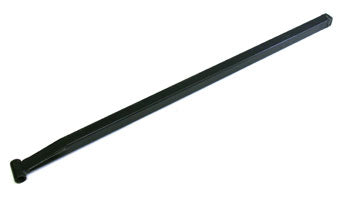
Push Rod for Eagleman Manual Pallet Jack
EA E117
Couldn't load pickup availability
- Expert support & fitment help
- 30-day returns
- Fast Shipping
Compatibility
|
Make |
|
|---|---|
|
Model |
|
Visit our diagram page for part references to popular models
Product Description
EA E117 Push Rod for Eagleman manual pallet jack is a steel linkage component designed to transmit mechanical force from the operating handle to the hydraulic lift mechanism. Fabricated from SAE 1045 alloy steel, it features a black oxide corrosion-resistant surface, M16 x 2.0 threaded tip, and machined clevis end. Nominal diameter is 0.750 inch, with an overall length of 17.25 inches. Breaking load capacity is rated at 4300 lbs minimum. Compatible with Eagleman manual pallet jack assemblies.
Specifications
Material & Construction
| Hardness | Rockwell C35 |
Part Numbers & Compatibility
| Make | Eagleman |
| Model | ES |
| Part Number | EA E117 |
| Manufacturer Part Number | EA E117 |
| Compatibility | Eagleman manual pallet jack assemblies |
Wheel Dimensions
| Nominal Diameter | 0.750 inch |
| Overall Length | 17.25 inches |
Performance Specifications
| Breaking Load Capacity | 4300 lbs minimum |
Additional Specifications
| Thread Type | M16 x 2.0 metric, right-hand thread |
| Material Specification | Alloy steel in accordance with SAE 1045 |
| Surface Finish | Black oxide corrosion-resistant |
Frequently Asked Questions
Q: Which manual pallet jack models is this part compatible with?
A: This part is compatible with Eagleman manual pallet jack assembliES. Verify the push rod length and thread specification match your equipment before ordering.
Q: What material is this part made from?
A: This part is fabricated from sae 1045 alloy steel with a black oxide corrosion-rESistant surface and a machined clevis end for reliable linkage connection.
Q: How do I know if this part needs to be replaced?
A: Inspect for visible cracks, bending, or thread damage. Push rod failure typically rESults from repeated overload, bent or misaligned linkage, hydraulic system prESsure spikES, or corrosion compromising the steel.
Q: What is the function of this part?
A: This part transmits mechanical force from the operating handle to the hydraulic lift mechanism. The clevis end connects to the hydraulic pump assembly, and the threaded tip engagES the pump plunger or actuating rod.
Q: What are the key featurES of this part?
A: This part is fabricated from sae 1045 alloy steel, featurES a black oxide corrosion-rESistant surface, and has a machined clevis end for reliable linkage connection.