

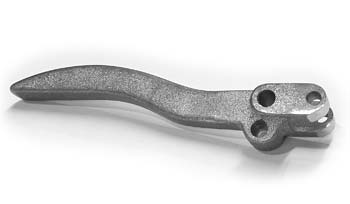
Eagleman Control Lever for Pallet Jacks
EA A137
Couldn't load pickup availability
- Expert support & fitment help
- 30-day returns
- Fast Shipping
Compatibility
|
Make |
|
|---|---|
|
Model |
|
Visit our diagram page for part references to popular models
Product Description
Technical specifications for Eagleman EA A137 Control Lever.
Compatibility: Fits pallet jacks made by Eagleman, model A. SKU: EA A137
Specifications
Part Numbers
| Manufacturer Part Number | EA A137 |
| Alternative Part Numbers | EAA137, EGA137 |
Frequently Asked Questions
Q: What does the EA A137 control lever do on an Eagleman model A pallet jack?
A: The EA A137 is the primary control lever for Eagleman model A pallet jacks. It allows the operator to manually actuate the hydraulic pump mechanism to raise, lower, and steer the equipment during material handling operations.
Q: What alternative part numbers cross-reference with the EA A137?
A: The EA A137 may also be referenced by alternative part numbers including EAA137 and EGA137 depending on supplier documentation. When ordering replacement parts, use the exact SKU EA A137 or confirm cross-references with technical specifications.
Q: Which Eagleman pallet jacks accept the EA A137 control lever?
A: The EA A137 is designed for manual pallet jacks manufactured by Eagleman, model A series. Verify your equipment designation before ordering to ensure proper fitment and operational compatibility.
Q: What material is the EA A137 control lever made from?
A: The EA A137 is typically manufactured from cast or forged steel combined with hardened pivot points. This material composition provides durability against operator force and environmental wear while maintaining smooth actuation cycles.
Q: What maintenance is needed for the EA A137 control lever to ensure long service life?
A: Regular inspection for cracks, bending, or corrosion is recommended. Keep pivot joints clean and lubricated to maintain smooth operation. Replace the EA A137 immediately if the lever becomes cracked, bent beyond tolerance, or fails to return to neutral position.
Q: How long does the EA A137 typically last in normal operation?
A: Under normal use conditions, the EA A137 control lever provides years of reliable service. Replacement is typically driven by physical damage, metal fatigue, or environmental corrosion rather than mechanical wear. Frequency of use and maintenance practices directly affect service life.