

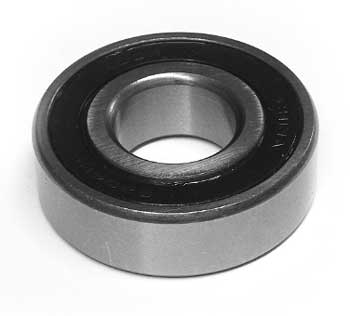
Bearing De for Manual Pallet Jack
GC 1046
Guaranteed Fit. Check fit with us before you buy. If we confirm it fits your machine and it doesn’t, we’ll exchange or refund it: no restocking fee, return shipping on us. How it works
Not sure it fits? Send us your make, model and serial number and we’ll check it before you buy.
Couldn't load pickup availability
- Expert support & fitment help
- 30-day returns
- Fast Shipping
Compatibility
|
Make |
- |
|---|---|
|
Model |
- |
Visit our diagram page for part references to popular models
Product Description
Bearing DE
Frequently Asked Questions
Q: What does the DE designation mean on the GC 1046 bearing?
A: DE stands for deep groove bearing design. This configuration provides increased load capacity and is commonly used in manual pallet jack load wheel assemblies and lifting mechanisms where durability and radial load handling are critical. The deep groove design allows the bearing to handle both radial and axial loads effectively.
Q: Is the GC 1046 compatible with Crown, Toyota, and Raymond equipment?
A: The GC 1046 is a replacement bearing compatible with multiple manual pallet jack platforms from Crown, Toyota, Raymond, Yale, and other major OEM manufacturers. Verify your equipment model and serial range against the GC 1046 specification sheet to confirm fitment. Dimensions and bore size must match your original bearing.
Q: What maintenance does the GC 1046 bearing require?
A: The GC 1046 is a sealed or shielded precision bearing requiring minimal maintenance when operating under normal conditions. Avoid exposing the bearing to excessive moisture, chemicals, or contamination. If the bearing becomes noisy, stiff, or difficult to rotate, replacement is recommended. Do not attempt to disassemble or relubricate sealed bearing units.
Q: Can I substitute the GC 1046 with a standard ball bearing?
A: The GC 1046 deep groove design is specified for particular load and performance requirements in your equipment. Substituting with a standard bearing or different OEM part number may result in poor fitment, premature failure, or equipment damage. Always use the exact replacement part number specified for your equipment model to ensure proper operation and warranty compliance.
Q: What is the failure signature if a GC 1046 bearing is worn?
A: Worn or failing GC 1046 bearings typically produce grinding noise during equipment operation, increased resistance when rotating wheels or lifting components, or visible play in the bearing assembly. If you experience these symptoms, replacement is necessary to restore equipment performance and prevent secondary damage to wheels, shafts, or load cells.