

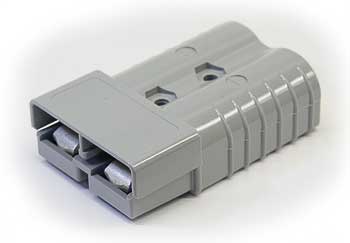
350-AMP Gray Housing Battery Connector Assembly for Electric Pallet
BK 994581
Guaranteed Fit. Check fit with us before you buy. If we confirm it fits your machine and it doesn’t, we’ll exchange or refund it: no restocking fee, return shipping on us. How it works
Not sure it fits? Send us your make, model and serial number and we’ll check it before you buy.
Couldn't load pickup availability
- Expert support & fitment help
- 30-day returns
- Fast Shipping
Compatibility
|
Make |
- |
|---|---|
|
Model |
- |
Visit our diagram page for part references to popular models
Product Description
The BK 994581 is a heavy-duty 350-amp gray housing battery connector assembly with integrated contacts, designed for direct replacement in electric pallet jacks, walkie stackers, and electric forklifts. Features tin-plated copper contacts for reliable conductivity and corrosion resistance in high-amp industrial applications. Pre-assembled housing and contacts ready for cable termination. Compatible with leading equipment manufacturers including Crown, Toyota, Raymond, Hyster, Jungheinrich, and others using 350-amp battery systems.
Frequently Asked Questions
Q: What is the amperage rating for the BK 994581 gray housing?
A: The BK 994581 is rated for 350 amps. This higher amperage rating makes it suitable for larger battery systems and heavy-duty electric lift truck applications.
Q: Does the BK 994581 include contact inserts?
A: Yes. The BK 994581 comes with contacts included. The housing and contacts are assembled and ready for cable termination or direct connection to battery terminals and charging systems.
Q: What equipment is the BK 994581 compatible with?
A: The BK 994581 housing assembly fits electric pallet jacks, walkie stackers, and sit-down rider forklifts from Crown, Toyota, Raymond, Hyster, and similar manufacturers that use 350 amp battery connections.
Q: What material are the BK 994581 contacts made from?
A: The contacts are tin-plated or nickel-plated copper construction to provide corrosion resistance and consistent conductivity across charge and discharge cycles in industrial warehouse conditions.
Q: Can the BK 994581 be used as a replacement for lower amperage connectors?
A: Yes. The 350 amp BK 994581 can replace lower amperage connectors on systems that do not require the full 350 amp capacity, but confirm your battery system voltage and cable gauge match the housing design first.
Q: What is the typical lifespan of the BK 994581 connector?
A: With proper maintenance and use, the housing and contacts typically last 3 to 5 years in normal warehouse duty. Corrosion or pitting of contact surfaces may occur faster in wet or salt-air environments.