

Hydraulic Seal Kit for Equipment Repair 3000 PSI Indus
GSK 532
Guaranteed Fit. Check fit with us before you buy. If we confirm it fits your machine and it doesn’t, we’ll exchange or refund it: no restocking fee, return shipping on us. How it works
Not sure it fits? Send us your make, model and serial number and we’ll check it before you buy.
Couldn't load pickup availability
- Expert support & fitment help
- 30-day returns
- Fast Shipping
Compatibility
|
Make |
- |
|---|---|
|
Model |
- |
Visit our diagram page for part references to popular models
Product Description
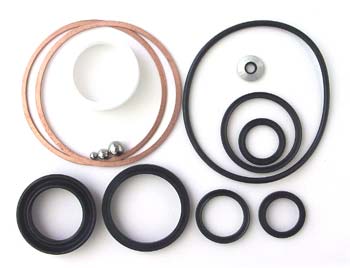
Hydraulic seal kit GSK 532 engineered for OEM equipment repair, compatible with standard hydraulic fluids, rated for 3000 PSI service pressure, and manufactured using nitrile, polyurethane, and PTFE seal elements. Designed for hydraulic cylinder maintenance in industrial applications.
Specifications
Part Numbers & Compatibility
| Manufacturer Part Number | GSK 532 |
| Part Number | GSK 532 |
| Application | Hydraulic cylinder maintenance in industrial applications |
| Compatibility | Compatible with standard hydraulic fluids |
Additional Specifications
| Backup Ring Material | Nylon (PA66) engineering polymer |
| Service Pressure | 3000 PSI |
| Seal Materials | Nitrile, polyurethane, and PTFE |
Frequently Asked Questions
Q: What is GSK 532 used for?
A: GSK 532 is a hydraulic cylinder seal kit designed for replacement in manual pallet jacks, electric pallet jacks, and forklifts. It ensures proper hydraulic system performance in industrial material handling equipment.
Q: What materials are used in GSK 532?
A: GSK 532 contains nitrile, polyurethane, and PTFE seal elements with Shore A 70 to 90 durometer hardness depending on specific seal component. Nylon (PA66) backup rings provide load support under high pressure.
Q: How do I know when to replace GSK 532?
A: Replace GSK 532 when you observe hydraulic fluid leakage around the cylinder rod, equipment does not lift or lower smoothly, or pressure drops during operation. Early replacement prevents costly cylinder damage.
Q: Is GSK 532 compatible with standard hydraulic fluids?
A: Yes, GSK 532 is engineered for compatibility with standard mineral-based hydraulic fluids. Confirm your equipment uses ISO VG 32, 46, or 68 grade hydraulic oil for optimal seal performance.
Q: What service pressure rating does GSK 532 have?
A: GSK 532 is rated for 3000 PSI service pressure. This rating covers standard industrial hydraulic systems in material handling equipment.