

Clark OEM Horn 36VDC for Electric Lift Trucks & Pallet Jacks
CL 1830463
Couldn't load pickup availability
- Expert support & fitment help
- 30-day returns
- Fast Shipping
Compatibility
|
Make |
|
|---|---|
|
Model |
- |
Visit our diagram page for part references to popular models
Product Description
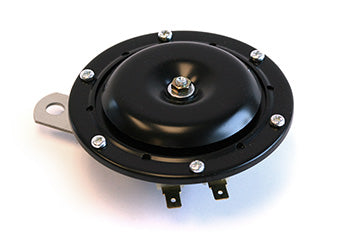
Clark OEM Horn (36VDC), part number CL 1830463, engineered for direct replacement on Clark electric lift trucks and pallet jacks. Nominal output rated at 110 dB, single terminal, designed for 36VDC–48VDC control voltage. Features shatter-resistant polymer housing and tin-plated copper terminal for industrial reliability.
Specifications
Electrical
| Nominal Operating Voltage | 36VDC |
| Voltage Tolerance | Suitable for operation at 36VDC to 48VDC |
Part Numbers
| OEM Part Number | CL 1830463 |
| Manufacturer Part Number | CL 1830463 |
Performance
| Rated Duty Cycle | Continuous operation at rated voltage |
Frequently Asked Questions
Q: What is the operating voltage range for the CL 1830463 horn?
A: The CL 1830463 is rated for 36VDC nominal operation and is suitable for use at 36VDC to 48VDC control voltage. This voltage range covers mid-range Clark electric lift trucks and some Raymond and Toyota models with comparable control systems.
Q: What is the dB output and duty cycle of the CL 1830463?
A: The CL 1830463 produces a nominal output of 110 dB and is rated for continuous operation at its rated voltage. This horn is designed for full-time industrial duty without time restrictions or cycle limitations.
Q: What type of housing material and terminal does the CL 1830463 have?
A: The CL 1830463 features a shatter-resistant polymer housing to protect against impact in busy warehouse and loading dock environments. The terminal is a single tin-plated copper contact that resists corrosion and provides reliable electrical connection under continuous duty.
Q: Which Clark electric lift truck models are compatible with the CL 1830463?
A: The CL 1830463 is engineered as a direct replacement for Clark electric lift trucks and pallet jacks specified for 36VDC to 48VDC horn operation. Review your equipment documentation or nameplate to confirm voltage compatibility before ordering.
Q: Why does the CL 1830463 have a tin-plated copper terminal instead of standard brass?
A: Tin-plated copper terminals provide superior corrosion resistance compared to bare brass, especially in humid, wet, or cold storage environments. The tin coating extends the life of the connection and reduces the risk of intermittent electrical failures caused by oxidation or arcing.