

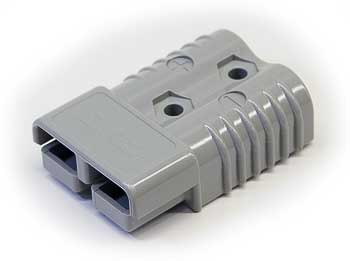
Replacement Housing for SB175 Gray Battery Connector
SY940
Couldn't load pickup availability
- Expert support & fitment help
- 30-day returns
- Fast Shipping
Compatibility
|
Make |
- |
|---|---|
|
Model |
- |
Visit our diagram page for part references to popular models
Product Description
Replacement housing for SB175 gray battery connector, suitable for use in electric lift truck and pallet jack applications. Features include a 175 amp rated load capacity, polycarbonate housing, compatibility with 2/0 AWG cable, and panel mount configuration with oil-resistant construction.
Specifications
Electrical
| Rated Current Capacity | 175 amps continuous duty |
| Voltage Class | 600V DC maximum rating |
Material
| Housing Material | Polycarbonate thermoplastic, flame retardant per UL94V-0 |
Part Numbers
| Manufacturer Part Number | SY940 |
Frequently Asked Questions
Q: What equipment does the SY940 housing fit?
A: The SY940 is a replacement housing for SB175 series battery connectors used in electric lift trucks and pallet jacks. It is gray in color and rated for 175 amps continuous duty at up to 600V DC.
Q: What are the electrical specifications of the SY940 housing?
A: The SY940 is rated for 175 amps continuous duty and 600V DC maximum voltage rating. This makes it suitable for 24V, 36V, 48V, and 80V battery systems commonly used in electric material handling equipment.
Q: What cable gauge does the SY940 accept?
A: The SY940 housing is compatible with 2/0 AWG cable. Verify your cable gauge matches this specification before ordering to ensure proper fit and electrical performance.
Q: What is the material composition of the SY940 housing?
A: The SY940 features a polycarbonate thermoplastic housing that is flame retardant per UL94V-0 standards and oil-resistant. The material is impact-resistant and designed for heavy-duty industrial environments.
Q: Is the SY940 a panel mount connector?
A: Yes, the SY940 is configured for panel mount installation on battery housings and equipment frames. The genderless modular design includes mechanical interlock features for secure connections in vibration-prone environments.
Q: How long does the SY940 housing last?
A: Polycarbonate housings like the SY940 typically last 3 to 5 years in standard heavy-duty use. Environmental factors such as temperature extremes, UV exposure, and chemical contact can shorten lifespan. Replace if cracks, brittleness, or discoloration occur.