
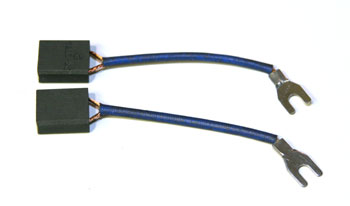
Hyster brush set for W40XL/W40XT pallet trucks
HY 2302180
Electric motors are model-, voltage-, rotation-, mounting-, shaft-, and sometimes serial-number specific. Installing an incompatible motor may result in equipment damage, electrical damage, or unsafe operation.
Before ordering, confirm:
- Equipment make and model
- Serial number (if applicable)
- Operating voltage
- Rotation direction (CW / CCW)
- Shaft diameter and length
- Mounting pattern and flange type
If you’re unsure, contact us before purchasing with your equipment details.
Non-Refundable Item: Motors are non-refundable. Please verify compatibility before purchasing.
Couldn't load pickup availability
- Expert support & fitment help
- 30-day returns
- Fast Shipping
Compatibility
|
Make |
|
|---|---|
|
Model |
|
Visit our diagram page for part references to popular models
Product Description
HY 2302180 is an OEM replacement brush set (contains two carbon brushes) engineered for Hyster electric lift truck drive motors, specifically used in W40XL and W40XT pallet truck models. Designed for 24VDC motor systems, these brushes maintain optimal motor commutation and long service life as per Hyster OEM specifications.
Compatibility: Fits pallet jacks made by Hyster, model W40XL/W40XT. SKU: HY 2302180
Specifications
Part Numbers & Compatibility
| Make | Hyster |
| Model | W40XL, W40XT |
| Motor Compatibility | Series-wound drive motor for Hyster W40XL, W40XT |
| Nominal Application Voltage | 24VDC motor system |
| Part Number | HY 2302180 |
| Compatible Equipment Models | Hyster W40XL, Hyster W40XT |
Additional Specifications
| Brush Material | Carbon-graphite composite for industrial DC motors |
| Quantity Per Set | 2 brushes |
| Inspection Interval | 500-hour intervals or per Hyster maintenance schedule |
Frequently Asked Questions
Q: What models is the HY 2302180 compatible with?
A: The HY 2302180 is designed for use with Hyster W40XL and W40XT series electric walkie pallet trucks.
Q: What material are the HY 2302180 brushes made from?
A: These brushes are manufactured from industrial-grade carbon-graphite composite, which provides low friction and stable commutation in series-wound drive motors.
Q: How do I know when to replace the HY 2302180 brushes?
A: Replace the brushes when they show signs of excessive wear, such as shortened length or irregular surface condition. Regular inspection and maintenance are recommended to ensure optimal motor performance.
Q: What is the HY 2302180 used for?
A: The HY 2302180 is a replacement brush set designed for use in Hyster electric lift truck drive motors, specifically for W40XL and W40XT models.
Q: Are there any specific maintenance requirements for the HY 2302180?
A: Regular inspection of the brushes is recommended to ensure they are in good condition. Clean the motor housing and check for any signs of wear or damage during routine maintenance.