

Raymond Key Switch for Electric Lift Trucks
RA 154-005-697
Guaranteed Fit. Check fit with us before you buy. If we confirm it fits your machine and it doesn’t, we’ll exchange or refund it: no restocking fee, return shipping on us. How it works
Not sure it fits? Send us your make, model and serial number and we’ll check it before you buy.
Couldn't load pickup availability
- Expert support & fitment help
- 30-day returns
- Fast Shipping
Compatibility
|
Make |
|
|---|---|
|
Model |
- |
Visit our diagram page for part references to popular models
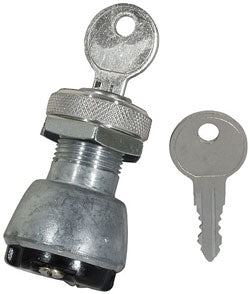
Product Description
Raymond RA 154-005-697 key switch designed for electric lift truck control panels, featuring 2-position rotary actuation, 24VDC rating, panel mount, and robust operator cycle life. Constructed with silver alloy contacts and die-cast actuator for reliable service in industrial fleet environments.
Specifications
Electrical
| Rated Voltage | 24VDC nominal control circuits |
| Switch Contact Rating | 10A at 24VDC |
Material & Construction
| Housing Material | Thermoplastic housing (flame retardant) |
| Key Material | Nickel-plated brass |
Part Numbers
| OEM Part Number | 154-005-697 |
Performance Specifications
| Cycle Life | 50,000 mechanical cycles minimum |
| Operating Torque | 0.4 Nm ±0.1 Nm (key rotation force) |
Frequently Asked Questions
Q: What equipment does the RA 154-005-697 key switch fit?
A: The RA 154-005-697 is designed for Raymond electric lift trucks and compatible with other OEM brands using equivalent 24VDC control panel switch specifications. Verify your truck model and control panel mounting configuration before ordering to ensure compatibility with your specific equipment.
Q: What are the electrical specifications for this key switch?
A: The RA 154-005-697 is rated for 24VDC nominal control circuits with a contact rating of 10A at 24VDC. The switch features 2-position rotary actuation with an operating torque of 0.4 Nm plus or minus 0.1 Nm and supports a minimum of 50,000 mechanical cycles.
Q: What materials are used in the RA 154-005-697 construction?
A: This key switch uses a flame-retardant thermoplastic housing, nickel-plated brass key material, and silver alloy contacts with a die-cast actuator. These materials provide corrosion resistance and durability in industrial fleet environments with frequent operator cycling.
Q: How long does this key switch typically last in service?
A: The RA 154-005-697 is rated for a minimum of 50,000 mechanical cycles, which translates to several years of typical daily use in electric lift truck control panel applications. Lifespan depends on environmental conditions, operator handling, and frequency of use.