
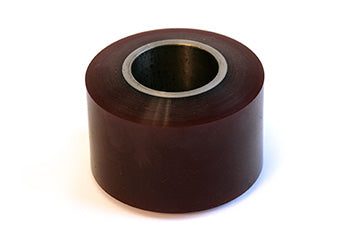
Polyurethane Load Wheel for Prime Mover Trucks
PR P-21038
Guaranteed Fit. Check fit with us before you buy. If we confirm it fits your machine and it doesn’t, we’ll exchange or refund it: no restocking fee, return shipping on us. How it works
Not sure it fits? Send us your make, model and serial number and we’ll check it before you buy.
Couldn't load pickup availability
- Expert support & fitment help
- 30-day returns
- Fast Shipping
Compatibility
|
Make |
|
|---|---|
|
Model |
- |
Visit our diagram page for part references to popular models
Product Description
PR P-21038 is a polyurethane load wheel for Prime Mover electric lift trucks and BT pallet jacks. It is compatible as a direct replacement for PM201 and cross-referenced with P21038-1 and P25199-(2) part numbers.
Specifications
Material & Construction
| Material | Polyurethane |
Part Numbers & Compatibility
| Make | Prime Mover, BT |
| Manufacturer Part Number | PR P-21038 |
| Cross-Reference Part Numbers | P21038-1, P25199-2 |
| Cross Reference Part Numbers | Replaces PM201, supersedes P25199-(2), equivalent to P21038-1 |
| Part Number | PM201 |
| Equivalent Part Numbers | P21038-1, P25199-(2) |
Additional Specifications
| Direct Replacement For | PM201 |
Frequently Asked Questions
Q: What makes and models is the PR P-21038 compatible with?
A: The PR P-21038 is a direct replacement for pm201 and is compatible with Prime Mover electric lift trucks and BT pallet jacks. It cross-references to p21038-1 and p25199-2.
Q: What material is the PR P-21038 made from?
A: The PR P-21038 is made from polyurethane for durability and grip.
Q: When should the PR P-21038 be replaced?
A: Replace the PR P-21038 when the polyurethane tread shows significant wear, flat spots develop, or the wheel no longer maintains proper contact with guide rails. Regular inspection helps prevent unexpected equipment failure.