

3.25 in. x 2.8.8 in. Load Wheel for Electric Lift Trucks
SU 626-XL
Couldn't load pickup availability
- Expert support & fitment help
- 30-day returns
- Fast Shipping
Compatibility
|
Make |
- |
|---|---|
|
Model |
- |
Visit our diagram page for part references to popular models
Product Description
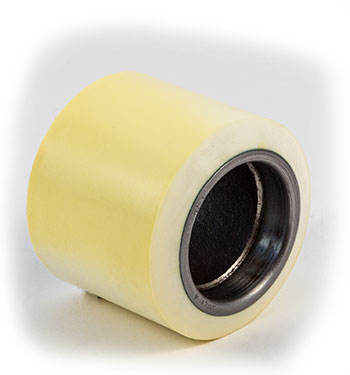
SU 626-XL Load Wheel, compatible with electric lift trucks, features a 3.25 inch diameter, 2.047 inch bore, 2.00 inch tread width, 95 Shore A hardness polyurethane, steel core, and is designed for high-impact, long run, and high-load applications.
Specifications: 3.250 inch diameter x 2.875 inch width (3.250" x 2.875" | 3.25 x 2.88 wheel | 3-1/4 x 2-7/8 | 82.55mm x 73.02mm)
Specifications
Material
| Tread Material | High-durability polyurethane compound |
| Wheel Core Material | Machined steel |
Part Numbers
| OEM Part Number | SU 626-XL |
| Manufacturer Part Number | SU 626-XL |
Wheel Dimensions
| Material | Cushothane XL |
| Outside Diameter | 3.25 |
| Inside Diameter | 1.938 |
| Width Side to Side | 2.875 |
| Bore Depth | 0.591 |
| Hub Width | 2.875 |
| Bore Outside Diameter | 2.0467 |
Frequently Asked Questions
Q: What is the difference between SU 626-XL and SU 627 wheels?
A: The primary difference is width. SU 626-XL is 2.875 inches wide while SU 627 is 2.0 inches wide. Both wheels share the same 3.25 inch OD and 1.938 inch ID bore. The wider SU 626-XL distributes load over a larger contact area, reducing pressure per square inch and extending wheel life in high-load applications. SU 626-XL is preferred for loads exceeding 600 lbs per wheel.
Q: Can I install SU 626-XL wheels on an electric pallet jack designed for narrower wheels?
A: No. Installing SU 626-XL (2.875 inches wide) on equipment designed for narrower wheels will cause binding and improper tracking. The wheel will either contact the chassis or sit outside the fork arms, creating instability and safety hazards. Always verify equipment frame width before purchasing replacement wheels. Measure the clearance between the inside surfaces of your wheel wells.
Q: What causes premature wear on SU 626-XL wheels and how do I diagnose it?
A: Premature wear symptoms include one-sided tread wear, visible gouges, or scuffing. Causes are typically misalignment (bent axles or frame), overloading beyond the 95 Shore A polyurethane rating, or continuous operation on rough concrete. Diagnose by inspecting tread wear pattern. Even wear indicates normal aging. Uneven wear suggests misalignment. Gouges indicate impact with sharp objects. Address root cause before replacing wheels or new wheels will fail the same way.
Q: What is the 95 Shore A hardness rating and why does it matter?
A: Shore A hardness measures polyurethane tread durability on a scale of 0 to 100. SU 626-XL material is 95 Shore A, meaning it is very hard and wear-resistant. This hardness resists cutting and abrasion but reduces shock absorption compared to softer wheels (60-70 Shore A). The 95 Shore A rating makes SU 626-XL ideal for long-run, high-load applications on smooth floors. Do not use on extremely rough surfaces where softer wheels would perform better.
Q: Do I need tools to install SU 626-XL wheels or is it a simple bolt-on replacement?
A: Installation requires basic hand tools only. Use an appropriately sized wrench or socket to remove the retaining nut on the existing axle, slide off the old wheel, and slide the SU 626-XL wheel onto the axle. Reinstall the retaining nut and tighten firmly. No press, bearing puller, or specialized equipment is needed. SU 626-XL wheels are pre-assembled with bearings and ready to bolt on.
Q: What is the rated load capacity for SU 626-XL wheels under normal duty cycles?
A: SU 626-XL is rated for approximately 800 to 900 lbs per wheel under normal duty cycles (8 to 10 hours daily operation on smooth concrete). Under severe duty cycles (continuous operation, rough surfaces, frequent impact), capacity drops to 600 to 700 lbs per wheel. Exceeding rated capacity accelerates polyurethane degradation, bearing wear, and core failure. Calculate actual load per wheel by dividing total truck load by the number of wheels and compare to your duty cycle rating.