

Load Wheel for Electric Lift Truck
SU S9143
Guaranteed Fit. Check fit with us before you buy. If we confirm it fits your machine and it doesn’t, we’ll exchange or refund it: no restocking fee, return shipping on us. How it works
Not sure it fits? Send us your make, model and serial number and we’ll check it before you buy.
Couldn't load pickup availability
- Expert support & fitment help
- 30-day returns
- Fast Shipping
Compatibility
|
Make |
- |
|---|---|
|
Model |
- |
Visit our diagram page for part references to popular models
Product Description
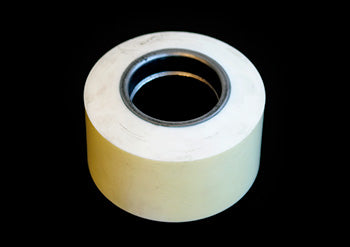
SU S9143 is a non-marking polyurethane load wheel designed for electric lift trucks and pallet jacks, featuring a 3.00-inch outer diameter, 3.66-inch tread width, 20 mm precision bearing bore, and a Shore A hardness rating of 97. Cross-reference part numbers include SU S9143-XL, SU S9143-XL-A, and SU S9143-XL-A-R. Suitable for direct replacement where these specifications apply.
Specifications: 4.000 inch diameter x 2.500 inch width (4.000" x 2.500" | 4 x 2.5 wheel | 4 x 2-1/2 | 101.60mm x 63.50mm)
Specifications
Material & Construction
| Tread Material | High grade non-marking polyurethane |
| Core Material | Steel hub |
| Tread Hardness Specification | Shore A 97 ±2 |
Part Numbers
| Manufacturer Part Number | SU S9143 |
| OEM Part Number | SU S9143 |
| Cross-Reference Part Numbers | SU S9143-XL, SU S9143-XL-A, SU S9143-XL-A-R |
| Supersedes | SUS9143XL |
Wheel Dimensions
| Material | Cushothane XL |
| Outside Diameter | 4 |
| Inside Diameter | 1.938 |
| Width Side to Side | 2.5 |
| Tread Profile | 1/4 Radius |
| Bore Depth | 0.591 |
| Hub Width | 2.5 |
| Bore Outside Diameter | 2.0467 |
Frequently Asked Questions
Q: What are the exact specifications of the SU S9143 wheel?
A: The SU S9143 is a non-marking polyurethane load wheel with the following specifications: 4.000 inch outer diameter x 2.500 inch tread width, 20 mm precision bearing bore, Shore A hardness rating of 97, steel hub core, and high-grade non-marking polyurethane tread. This wheel is designed for electric lift trucks and pallet jacks where tread marks on finished floors must be avoided. The 97A hardness provides a balanced combination of durability and grip.
Q: What equipment models accept the SU S9143 wheel?
A: The SU S9143 fits any electric lift truck or pallet jack requiring a 4 x 2.5 wheel with a 20 mm bearing bore. Common compatible equipment includes mid-range Crown, Raymond, Yale, and Toyota models from the 2010 to 2020 manufacturing period. Cross-reference part numbers include SU S9143-XL, SU S9143-XL-A, SU S9143-XL-A-R, and legacy designation SUS9143XL. Verify your equipment bore diameter and load rating before substituting. Provide your model and serial range to confirm fitment.
Q: Why choose a non-marking wheel instead of a standard wheel?
A: Non-marking polyurethane tread does not leave dark scuffs or deposits on polished concrete, tile, or sealed floors. Use the SU S9143 in retail spaces, hospitals, food distribution centers, or any environment where floor appearance matters. Standard polyurethane wheels leave visible marks that require frequent floor buffing. The SU S9143 non-marking compound is formulated to remain clean and is easier to keep compliant with cleanliness standards in sensitive environments.
Q: How does the SU S9143 perform compared to the SU S9143 XL variant?
A: Both have identical outer dimensions and non-marking properties. The SU S9143 uses standard polyurethane bonding. The SU S9143 XL adds proprietary XL3 bonding technology for significantly higher cut, tear, and load resistance. Choose SU S9143 for standard duty in controlled environments. Choose SU S9143 XL if the pallet jack regularly contacts sharp edges, debris, or operates at maximum load capacity. The XL variant costs more but lasts 40 to 60 percent longer in demanding applications.
Q: Is the SU S9143 wheel bearing sealed or grease-packed?
A: The SU S9143 assembly information does not specify bearing type. Most assemblies from this specification era use sealed ball bearings requiring no maintenance. Some variants use grease-packed bearings requiring annual lubrication with lightweight lithium grease. Contact the parts supplier or check the wheel assembly documentation to confirm your specific unit. If maintenance information is unavailable, assume sealed bearings and inspect for noise or play every 200 operating hours.
Q: What is the typical replacement interval for the SU S9143 wheel?
A: In normal warehouse duty, expect the SU S9143 to operate 2000 to 3500 hours before tread degradation requires replacement. Accelerated wear occurs on rough concrete or when operating consistently at or near maximum load capacity. In retail or food industry settings where appearance is critical, replace wheels when any discoloration, flat spots, or visible wear becomes apparent, even if structural integrity remains. Track your actual replacement intervals to budget maintenance costs accurately.